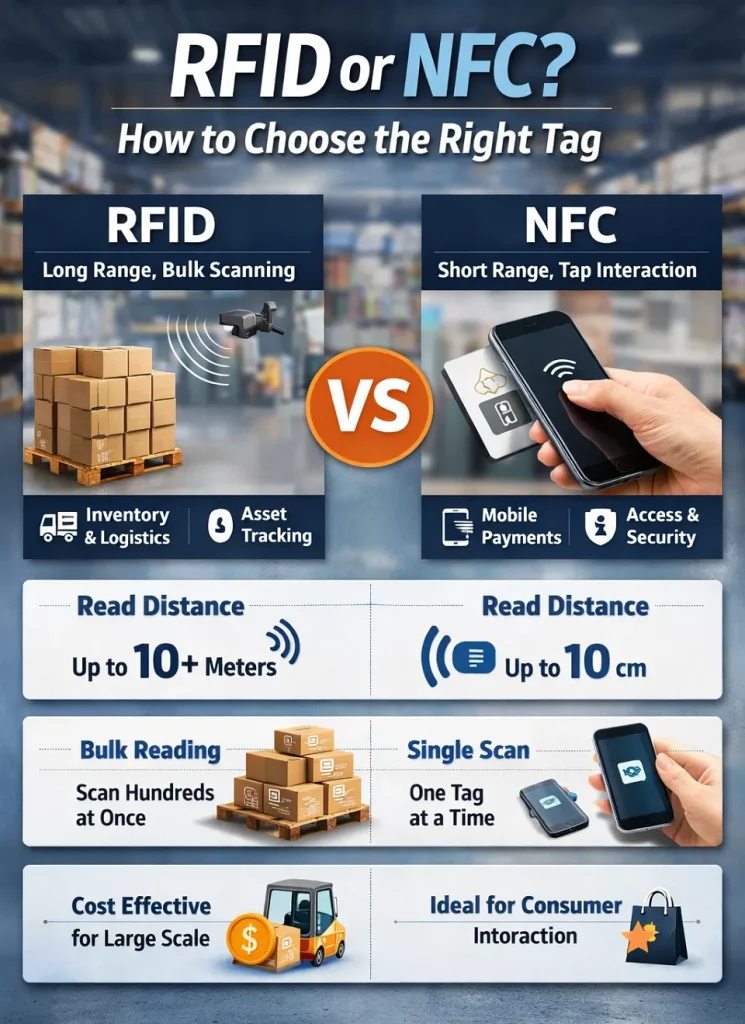
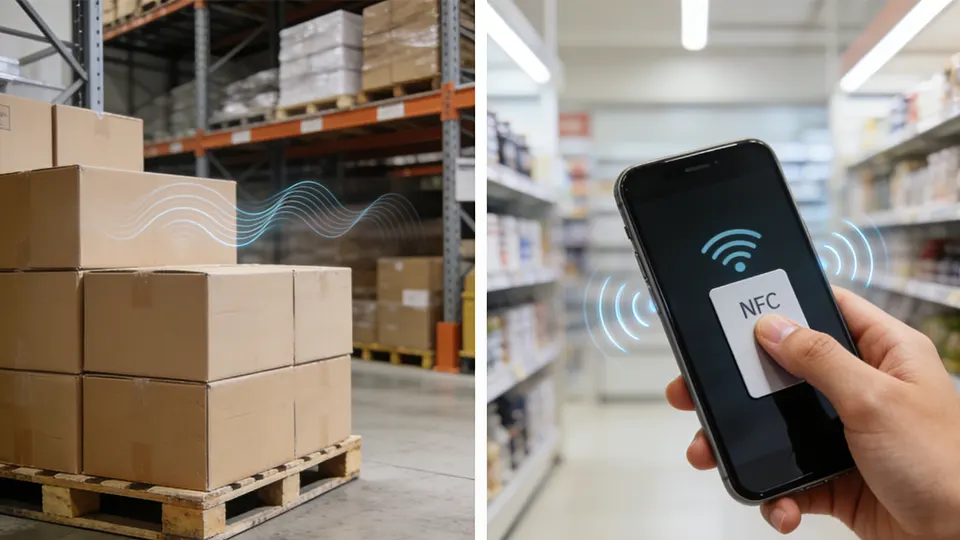
In industries such as retail, logistics, warehousing, healthcare, and event management, choosing the right tagging technology is no longer a technical detail—it is a strategic decision that directly affects efficiency, cost control, data accuracy, and user experience. NFC and RFID are often discussed together, yet they are designed for fundamentally different interaction models. Treating them as interchangeable frequently leads to over-engineered systems or disappointing ROI.
This article provides a practical, scenario-driven guide to deciding when NFC or RFID is the better choice. Rather than focusing on specifications alone, it examines operational workflows, environmental constraints, cost structures, and real-world deployment examples where both technologies coexist.
Technology should serve business objectives, not the other way around. The most successful projects start with a clear understanding of what problem needs to be solved and at which operational stage data is required.
Business Objective–Driven Decisions
Before selecting tags or readers, organizations should define the primary goal of the project. Is the objective to improve inventory accuracy, accelerate logistics throughput, reduce labor costs, prevent counterfeiting, or enable customer interaction?
Case Example (RFID):
A mid-size apparel chain deployed UHF RFID across all stores to gain full inventory visibility. Cycle counting time dropped from several hours to minutes, and inventory accuracy improved from approximately 85% to over 98%. The primary driver was operational efficiency at scale.
Case Example (NFC):
The same retailer introduced NFC tags on loyalty cards and select premium items. Customers used smartphones to check authenticity, access care instructions, and collect loyalty points at checkout. Here, NFC was not used for inventory tracking, but for direct consumer interaction and brand engagement.
Operational workflows largely determine whether close-range, single-item interaction or long-range, batch scanning is required.
RFID excels in scenarios where many items must be identified simultaneously without line-of-sight. NFC, by contrast, is intentionally designed for deliberate, one-to-one interaction.
Efficiency Comparison:
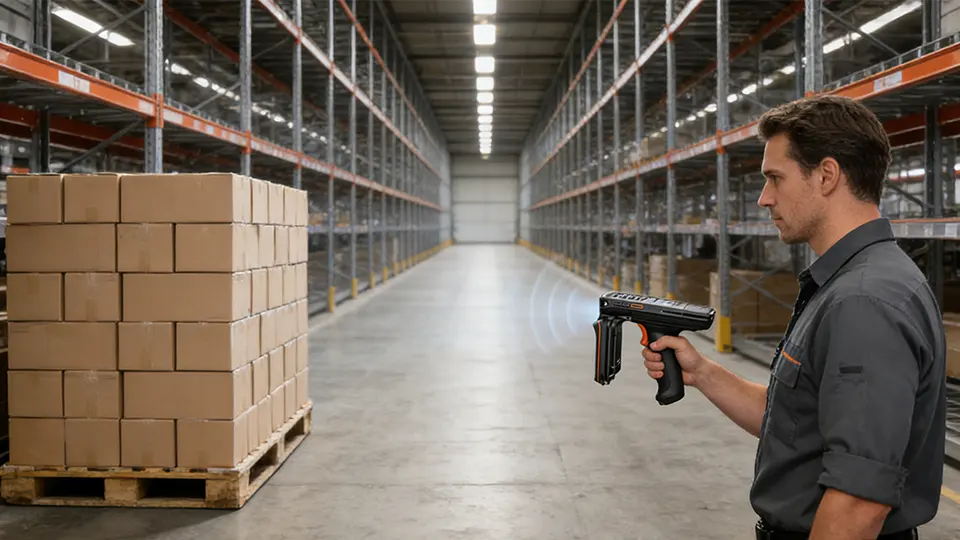
In a logistics hub, scanning a pallet containing 100 cartons using UHF RFID tags based on Impinj Monza R6 chips took less than five seconds. Performing the same task with NFC—scanning each carton individually—would have required more than 20 minutes, making it impractical for high-throughput operations.
Complementary Workflow Example:
Within those same cartons, high-value electronic components carried NFC tags. While RFID handled inbound and outbound logistics in bulk, distributors and service partners later used NFC via smartphones to verify authenticity and retrieve warranty data at the item level. The two technologies operated at different stages without overlap or redundancy.
Physical environments often impose constraints that influence technology choice more than theoretical performance specifications.
Tags in Challenging Environments
Metal surfaces, liquids, and dense materials can affect radio performance. UHF RFID typically requires specialized anti-metal or on-metal tag designs, while HF and NFC tags rely on short-range magnetic coupling.
Test Data:
In a laboratory simulation with dense liquid containers, HF anti-liquid NFC tags maintained read success rates above 98% when properly spaced and oriented. Their short read distance reduced unintended interference, making them suitable for controlled, single-item verification scenarios.
Read Distance and Batch Processing
NFC typically operates within a few centimeters, which is ideal for intentional user actions but unsuitable for inventory counting. UHF RFID can achieve read distances of several meters, enabling rapid batch processing.
Retail Insight:
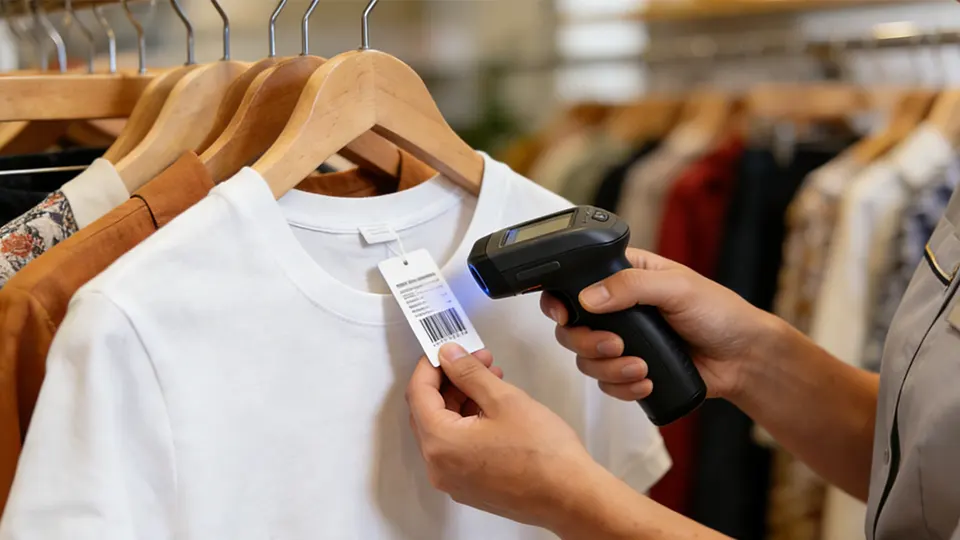
In a store carrying roughly 1,000 apparel items, a handheld UHF RFID reader completed a full inventory scan in about five minutes. Scanning each item individually with NFC would have taken close to two hours and required significantly more labor.
Cost considerations extend beyond tag price. Hardware investment, system integration, labor savings, and risk reduction all factor into ROI.
Tag Cost and Value Alignment
UHF RFID tags are generally inexpensive and well-suited for large volumes. NFC tags cost more per unit, which limits their use to scenarios where the value per item or interaction justifies the expense.
RFID ROI Example:
An electronics retailer applied UHF RFID tags costing approximately $0.12 per unit across its warehouse inventory. Within six months, reduced labor costs and fewer shipping errors generated savings exceeding $25,000.
NFC ROI Example:
A wine importer applied NFC tags to limited-edition bottles retailing above $80. Although each tag cost more than $0.80, counterfeit-related complaints dropped by 60%, and repeat purchases increased due to post-sale engagement. In this case, ROI came from brand protection rather than operational efficiency.
System Integration Considerations
NFC benefits from compatibility with smartphones and existing POS terminals, reducing upfront hardware costs. RFID systems require dedicated readers, antennas, and backend integration, but scale more efficiently in multi-store or warehouse environments.
Retail and Omnichannel Operations
· RFID: Enables real-time inventory accuracy, automated replenishment, and unified online-offline stock management.
· NFC: Supports self-checkout interactions, loyalty programs, and in-store product information access.
In apparel retail, UHF RFID deployments commonly improve inventory accuracy by 10–15%, directly reducing stockouts and overstock situations.
Logistics and Warehousing
· RFID: Ideal for pallet-level scanning, shipment verification, and exception detection at dock doors.
· NFC: Applied at the package or item level for authentication, delivery confirmation, and lifecycle tracking of high-value or regulated goods.
Case Example:
A cross-border e-commerce warehouse implemented UHF RFID for end-to-end shipment tracking. Package loss rates dropped by 50% compared to manual barcode scanning, while NFC tags were reserved for post-delivery verification on premium items.
Events and Exhibitions
· NFC: Commonly used for check-in, access control, and mobile payments.
· RFID: Enables anonymous crowd flow analysis and zone-based attendance tracking.
At a large trade exhibition, RFID wristbands tracked over 5,000 visitors, producing heatmaps that informed booth placement and staffing decisions, while NFC was used at entry points for fast check-in.
The physical form of a tag influences durability, readability, and user acceptance.
· RFID tags: Labels, embedded tags, cards, and wristbands for inventory and logistics.
· NFC tags: Cards, stickers, or embedded in packaging for user interaction.
Industry Tip:
In apparel, using a single RFID tag per garment maximizes read reliability and minimizes signal collision.
Reader deployment should match the scenario: handheld RFID readers for stores, fixed gates for warehouses, and NFC-enabled terminals for access points or consumer interaction.
Professional deployments often rely on proven chip platforms:
· NXP NTAG213 (NFC): Widely used for product authentication, digital manuals, loyalty enrollment, and consumer-facing interactions via smartphones.
· Impinj Monza R6 (UHF RFID): Common in logistics, apparel, and warehouse automation due to its high read sensitivity and stability in bulk environments.
Chip selection affects read reliability, durability, and long-term system compatibility.
Choosing between NFC and RFID is not about selecting the “better” technology, but about placing the right tool at the right operational stage. RFID excels at answering the question, “Where are all my items right now?” NFC answers a different question: “Is this specific item genuine, and how does a person interact with it?”
In many real-world deployments, the most effective solutions combine both technologies. By aligning business objectives, workflows, environmental conditions, and ROI expectations, organizations can deploy scalable, reliable tagging systems that deliver measurable value rather than unnecessary complexity.