
In today’s contactless technology landscape, NFC (Near Field Communication) has become essential for enabling fast, secure, and seamless interactions between devices. While the term NFC is often used broadly, its real-world deployment differs significantly depending on whether it is implemented on mobile devices or through dedicated readers. Businesses, developers, and system integrators need to understand these distinctions to optimize operations, improve user experiences, and ensure long-term scalability. This article explores the differences between mobile NFC and dedicated NFC readers, highlighting functional capabilities, chip-level specifics, real-world applications, and deployment considerations.
Mobile NFC refers to NFC functionality embedded into smartphones, tablets, and wearable devices. Mobile NFC is active, meaning it requires power from the device battery to operate and communicate with other NFC-enabled devices or tags. Its flexibility makes it highly versatile for both consumer and enterprise applications.
The first key capability is card emulation, allowing smartphones to mimic credit cards, transit passes, or secure access credentials. Platforms such as Apple Pay and Google Wallet rely on this function to replace multiple physical cards with a single device, simplifying payments and authentication.
Second, mobile NFC supports peer-to-peer communication, enabling devices to exchange small amounts of data. This can include digital business cards, authentication tokens, or configuration data for IoT devices.
Third, mobile NFC can read and write NFC tags, which are commonly embedded in smart posters, product labels, and access badges. Writing to tags enables updating inventory records, provisioning IoT devices, or configuring access control systems in real time.
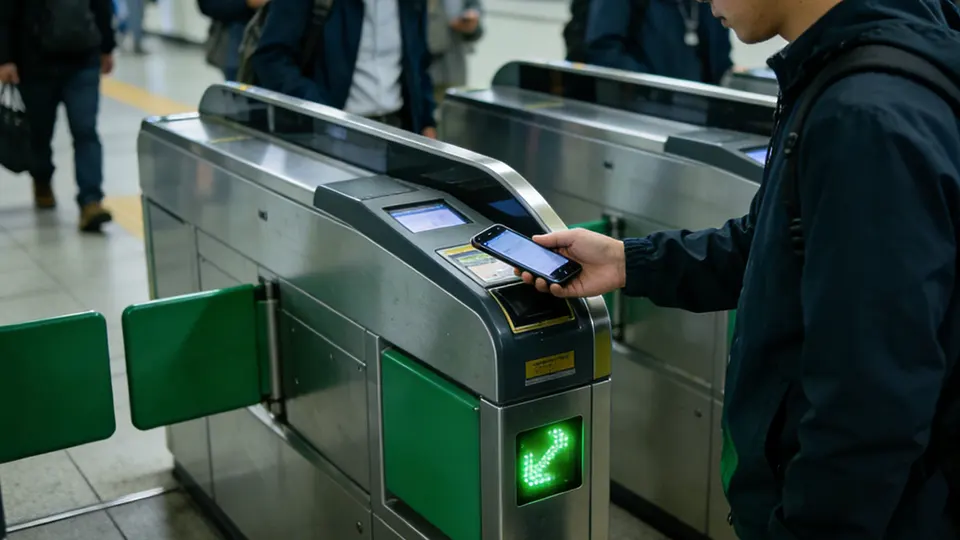
A practical example is a commuter in Tokyo tapping their smartphone at a subway turnstile. The device acts as a secure card, authenticates with the terminal, and grants entry almost instantly. In corporate environments or hotels, mobile NFC can transmit encrypted credentials to smart locks, removing the need for physical keycards. Marketing campaigns also leverage mobile NFC: consumers can scan posters or product tags to trigger app downloads, register for loyalty programs, or access interactive content.
Despite its convenience, mobile NFC has limitations. Thick phone cases, metal frames, or poorly positioned antennas can interfere with signal transmission. Software-related issues, such as misconfigured settings or incompatible applications, can prevent NFC from functioning correctly. Since it is active, mobile NFC requires sufficient battery power. Modern smartphones commonly use NFC controllers such as PN66T, which support ISO/IEC 14443 Type A/B protocols and Type 4 tag communication, providing low-power and secure operations.
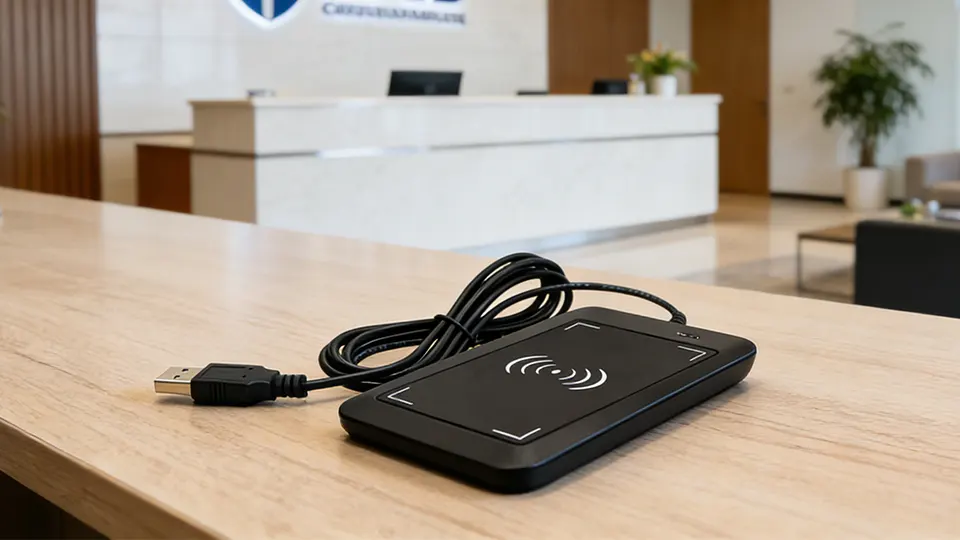
Dedicated NFC readers are fixed or purpose-built devices designed for consistent performance in controlled environments. They are often deployed in enterprise, retail, and industrial scenarios where reliability and high throughput are essential. Most dedicated readers interact with passive tags, which lack internal power and rely on the reader’s electromagnetic field for communication.
Some dedicated readers are active terminals, equipped with their own power source and controllers to handle complex tasks such as secure payments, access management, or inventory scanning. They usually consist of an antenna module for stable signal generation, a controller chip for encoding and decoding NFC communication, and connectivity interfaces like USB, Ethernet, or RS-232 to integrate with enterprise systems.
Real-world applications are broad. Retail POS systems use fixed NFC readers to process contactless payments efficiently and reliably, independent of the customer’s device. Corporate offices deploy readers for secure access control, authenticating employee badges or mobile credentials while logging events for compliance. Warehouses and logistics centers rely on readers to scan tagged items on conveyor belts or storage racks, automatically updating ERP or inventory systems and reducing human error.
At the chip level, dedicated readers often use controllers such as PN532, which enable robust communication, secure transactions, and high-speed data handling. An enterprise-grade example is the DTB-DR100 fixed reader, which integrates seamlessly with back-end systems for inventory management and access control. That product is an example of a high-reliability dedicated reader complementing mobile NFC devices.
While both mobile NFC and dedicated readers facilitate contactless interactions, their fundamental characteristics differ. Mobile NFC is active, battery-powered, portable, and capable of reading, writing, and emulating cards. Dedicated readers are generally fixed, optimized for reading passive tags, and integrated with enterprise systems for consistent, high-speed operation.
Most modern contactless systems require both technologies to work together. In retail payments, a smartphone acts as the “card,” while the dedicated reader functions as the “terminal.” The mobile device transmits credentials, and the reader validates and processes the transaction. Similarly, access control, inventory management, and marketing engagement rely on the complementary capabilities of mobile NFC and dedicated readers to provide a seamless user experience.
Understanding the real-world application of these technologies requires examining how mobile devices and fixed readers work together.
Retail Payments: Mobile devices equipped with NFC controllers transmit payment credentials to a POS terminal. Dedicated readers with controllers authenticate the transaction and communicate with payment gateways, enabling secure, near-instant payments.
Corporate and Hospitality Access Control: Employees’ mobile devices store encrypted credentials, which communicate with fixed readers for access authorization. Chipsets in mobile devices and fixed readers ensure low latency, accurate detection, and strong encryption. Temporary digital keys for hotel guests can be issued and revoked instantly, improving both security and operational efficiency.
Marketing Engagement: Mobile devices interact with passive NFC tags embedded in posters or packaging. Consumers can trigger app downloads, loyalty program registration, or exclusive content. Dedicated readers can aggregate interaction data, providing analytics for marketing campaigns. Here, mobile devices facilitate direct consumer engagement, while fixed readers support enterprise-grade data collection and monitoring.
Successful NFC implementation requires attention to environmental, technical, and operational factors.
Quick Deployment Checklist:
NFC continues to evolve, merging mobile flexibility with enterprise-grade reliability. Mobile devices increasingly support multiple virtual cards, allowing users to carry payment, access, and identification credentials on a single device. Dedicated readers integrate with cloud-based platforms, enabling real-time monitoring of inventory, assets, and user interactions.
Hybrid solutions that combine mobile portability with reader-grade performance are emerging for flexible deployment in retail, warehousing, and logistics. Advanced NFC controllers provide faster data rates, extended read ranges, and improved anti-collision performance. These developments highlight the growing synergy between mobile NFC and dedicated readers, creating highly scalable and secure contactless ecosystems.
Strategically deploying mobile NFC and dedicated readers allows businesses to support payments, access control, asset tracking, and customer engagement simultaneously while ensuring operational efficiency and scalability.
Mobile NFC and dedicated NFC readers serve complementary roles in modern contactless ecosystems. Mobile NFC offers flexibility, portability, and multi-functionality, enabling secure payments, digital keys, and interactive experiences. Dedicated readers provide stability, speed, and enterprise-level reliability for POS systems, access control, and inventory management. Together, they form a robust ecosystem capable of seamless operations and optimal user experience.
By understanding chip-level specifics, real-world applications, and deployment considerations, businesses can fully leverage NFC technology to optimize workflows and enhance operational efficiency.