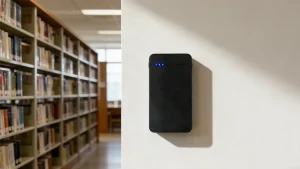

An NFC access control system is only as reliable as the credentials used within it. While many organizations focus on readers, controllers, and management software, the NFC access card remains the core element that determines compatibility, security, and long-term performance.
Most enterprise NFC access cards operate at 13.56 MHz and follow ISO 14443 standards. However, not all cards offer the same level of protection. A modern office building may only require basic employee identification, while a financial institution, research laboratory, or data center may need advanced encryption and secure authentication.
Among the most commonly deployed chips is the NXP MIFARE Classic EV1 series. Available in 1K and 4K memory capacities, these cards have been used in millions of access control installations worldwide. Their low cost and broad reader compatibility make them attractive for office environments with hundreds or even thousands of users.
As security requirements increase, many organizations move toward MIFARE DESFire EV2 and MIFARE DESFire EV3 technology. These chips support AES-128 encryption, mutual authentication, and multiple secure applications within a single credential. DESFire EV3, in particular, can support up to 32 separate applications and offers significantly stronger protection against unauthorized duplication compared to legacy systems.
NTAG213, NTAG215, and NTAG216 chips are also found in certain NFC access card projects, especially where smartphone interaction is required. Although these chips are often associated with consumer NFC applications, they can play a role in lightweight access management and visitor identification systems.
In high-security environments, CPU smart cards remain the preferred option. Unlike traditional memory cards, CPU cards contain an onboard processor capable of executing cryptographic operations internally, significantly improving resistance to cloning and data manipulation.
The selection process should consider not only current needs but also future scalability. A company deploying 300 employee cards today may need to manage 3,000 credentials within a few years, making platform compatibility a critical long-term factor.
Enterprise NFC access cards are no longer limited to door entry. Over the past decade, access control systems have evolved into integrated identity platforms connecting people, facilities, and business operations.
In a typical corporate headquarters, employees may use NFC access cards dozens of times per day. Permissions are often assigned by department, role, shift schedule, or clearance level, and can be updated remotely without reissuing physical cards.
Modern workplaces increasingly consolidate multiple functions into a single credential, allowing one NFC card to handle access, attendance, payments, and internal services.
Common applications include:

Manufacturing facilities represent one of the largest adoption areas. In factories with thousands of workers, access systems must process extremely high transaction volumes in real time. A plant with 1,500 employees may generate more than 20,000 access events per day.
In education, NFC credentials are widely used across universities for dormitory access, classroom entry, library systems, meal plans, and student identification. Large campuses benefit from centralized credential management that reduces administrative overhead.
Healthcare environments also rely heavily on NFC access control. Hospitals must strictly regulate entry to laboratories, operating rooms, medication storage, and patient data systems, ensuring full traceability of staff movement.
Security is the starting point, but operational efficiency is where NFC access control systems deliver long-term value.
Unlike mechanical key systems, digital credentials can be issued, modified, or revoked instantly. A lost card can be disabled within seconds, significantly reducing security exposure.
Organizations typically see improvements in several areas:
Authentication speed is another critical factor. Most NFC systems complete verification within 200–300 milliseconds, enabling smooth entry even during peak hours.
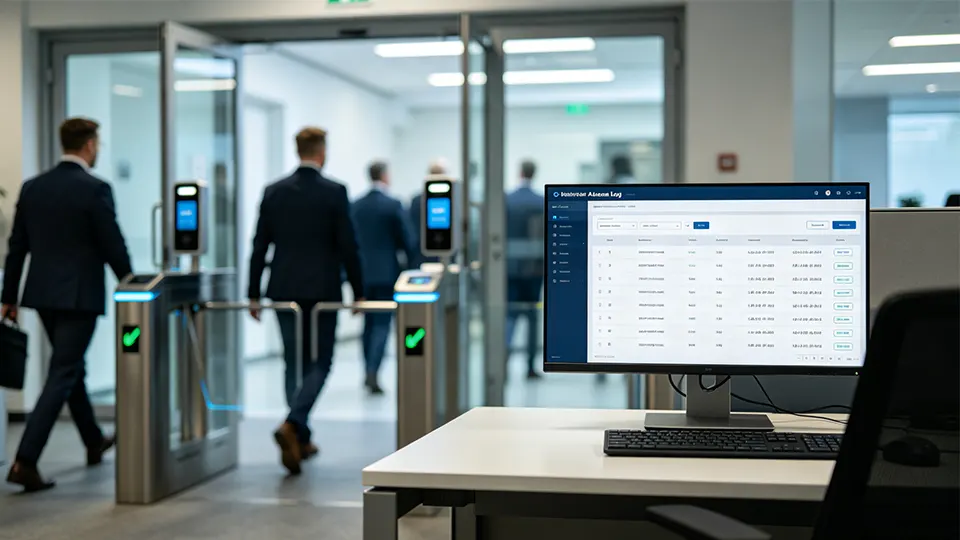
Access data also becomes a valuable operational resource. Facility managers can analyze occupancy patterns, peak traffic flow, and space utilization, helping optimize building efficiency.
For enterprises with multiple sites, centralized access management provides a unified control layer across thousands of employees and hundreds of access points.
Selecting NFC access cards requires more than choosing a chip type. Compatibility issues remain one of the most common causes of deployment delays.
A structured evaluation typically includes:
Card material is another important factor. PVC cards are suitable for standard office environments, while industrial conditions may require higher durability against heat, chemicals, or moisture.
Customization is now standard in enterprise deployments, including employee photos, QR codes, serial numbers, and corporate branding.
Many organizations also adopt pre-encoding services, where cards are programmed and initialized before delivery. This reduces on-site workload and speeds up deployment significantly.
Scalability is frequently underestimated. A system designed for 500 users should ideally support growth to several thousand without infrastructure changes.
Smartphone-based credentials are increasingly common in modern access control systems, offering flexibility and remote provisioning.
Mobile credentials provide clear advantages:
However, physical NFC cards remain widely used due to several practical limitations of mobile systems:
As a result, many enterprises adopt a hybrid model where both mobile credentials and physical NFC cards are issued. This ensures continuity in case a device is lost, damaged, or unavailable.
Hybrid systems are especially common in large organizations with diverse device ecosystems and multi-site operations.
Modern access control security extends far beyond the card itself. The full system includes readers, controllers, software platforms, communication channels, and administrative processes.
One of the most common risks is credential cloning in legacy systems. This has accelerated the transition toward DESFire EV2, EV3, and CPU-based smart cards in high-security environments.
Another critical issue is inactive credential management. Employee cards should be deactivated immediately upon role change or departure to prevent unauthorized access.
Effective security strategies typically include:
Audit logs play a key role in compliance, particularly in regulated industries where access records must be retained for extended periods.
Regular reviews ensure access permissions remain aligned with current job responsibilities, reducing long-term security drift.
NFC access cards have evolved from simple door keys into core components of enterprise identity systems. Their role now spans security, operations, and data-driven facility management.
For organizations deploying NFC access control systems, success depends on three key factors:
When these elements are aligned, NFC access control becomes a cost-efficient and highly reliable foundation for modern enterprise security infrastructure.