Managing an elderly care facility requires accurate information at every stage of daily operations. From resident identification and caregiver rounds to activity participation and emergency response, nursing homes need reliable records to maintain consistent service quality.
As care facilities grow larger, manual management methods become increasingly difficult to maintain. Paper-based attendance sheets, handwritten patrol records, and manual information searches may create additional workload for caregivers and managers. In a nursing home with more than 100 residents, dozens of caregivers may generate thousands of daily care interactions, including room visits, activity support, and service confirmations.
NFC wristband attendance monitoring provides a practical approach for improving these processes. By integrating an NFC chip into a wearable wristband, each resident can have a unique digital identity connected with a management platform. Caregivers can use NFC-enabled smartphones or readers to access resident information and record care activities quickly.
An NFC elderly care solution usually combines three key elements: NFC wristbands, reading devices, and software platforms. When these components are properly integrated, nursing homes can create digital records for resident management, caregiver attendance, patrol tracking, and daily activities.
NFC wristbands typically operate at 13.56 MHz and comply with standards such as ISO/IEC 14443. These characteristics make NFC suitable for controlled identification scenarios where short-range communication, stable reading performance, and convenient operation are required.
Daily nursing home operations involve many repeated tasks. Caregivers need to confirm resident identity, complete scheduled checks, record service activities, and respond quickly when assistance is required.
Traditional management methods often depend on manual documentation. While this approach may work in smaller facilities, larger nursing homes usually need more efficient ways to organize information.
Common management difficulties include:
NFC wristbands help connect physical residents with digital records. Each wristband contains an NFC chip with a unique UID (Unique Identifier). After registration, the UID can be associated with a resident profile in the software system.
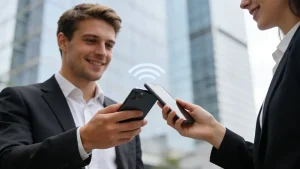
When a caregiver taps an NFC-enabled device near the wristband, the system can identify the corresponding resident and display relevant information.
A resident profile may include:
This process reduces the time required to search for information manually. It also helps caregivers confirm details before providing services, especially during shift changes when staff members need to quickly understand resident requirements.
For residents receiving memory care services, accurate identification is particularly important. NFC wristbands provide an additional layer of identity management by allowing caregivers to verify information through a simple tap.
The application value of NFC wristbands extends beyond basic identification. When connected with management software, the same wearable device can support multiple workflows inside elderly care facilities.
Resident identification is the foundation of NFC wristband applications.
Each resident receives an assigned NFC wristband, and the embedded chip stores or connects to a digital identity. Depending on project requirements, the wristband can use different NFC chips.
For basic identification applications, NTAG213 is commonly selected. It is an NFC Forum Type 2 Tag product with 144 bytes of user memory, suitable for storing simple NDEF messages or linking to cloud-based resident information.
When more data storage is required, NTAG215 and NTAG216 can be considered. NTAG216 provides up to 888 bytes of user memory, allowing more information to be stored directly on the chip.
For applications requiring stronger security, MIFARE DESFire EV3 supports advanced encryption functions and is widely used in secure identification projects.
The wristband material also affects user experience. Silicone NFC wristbands are commonly used in elderly care environments because they are lightweight, comfortable, and suitable for long-term wearing.
A suitable nursing home wristband should support daily activities such as:
Waterproof protection and durable encapsulation help ensure stable operation throughout the product lifecycle.
Caregiver attendance monitoring is one of the most valuable applications of NFC technology in nursing homes.
Daily care requires staff members to complete scheduled rounds, including checking resident rooms, assisting daily activities, and confirming service completion. Traditional paper records make it difficult for managers to verify whether tasks were completed at the correct time.
With NFC monitoring, fixed NFC checkpoints can be installed in important locations. Caregivers use NFC smartphones or readers to scan each checkpoint during their rounds.
The workflow usually includes:
For example, a 200-bed nursing facility may install NFC checkpoints near 50 resident rooms, rehabilitation areas, dining spaces, and common activity zones. Care managers can review completed rounds through digital records instead of checking handwritten forms.

This approach improves transparency in daily operations and provides clearer information about caregiver activities.
In a facility with 40 caregivers, even small improvements in attendance recording efficiency can significantly reduce administrative workload over time.
Nursing homes provide various daily programs to support residents’ physical and social well-being, including rehabilitation exercises, group activities, dining services, and recreational programs. Recording participation helps caregivers understand residents’ routines and adjust care arrangements when necessary.
Traditional activity registration often relies on manual sign-in sheets. When dozens or hundreds of residents participate in different activities every day, maintaining accurate records can become time-consuming.
NFC wristbands simplify this process by allowing residents’ participation to be recorded through a quick tap. NFC checkpoints can be installed in activity rooms, rehabilitation areas, dining spaces, and other frequently used locations.
A typical NFC activity tracking process includes:
The collected data can include:
For example, a nursing home organizing daily rehabilitation sessions can use NFC wristbands to identify participating residents and review attendance patterns over time. This information helps care teams understand whether residents are actively involved in scheduled programs.
NFC wristbands can also support emergency information access. When a resident requires immediate assistance, caregivers can quickly read the wristband and retrieve essential information through the connected system.
Depending on the software design, the available information may include:
During shift changes, this function allows new caregivers to understand important resident information more efficiently, reducing unnecessary communication delays.
A reliable NFC wristband management system requires coordination between hardware, software, and data management processes. The wristband provides identification, NFC devices collect information, and software platforms organize the collected data.
The NFC wristband is the physical interface between residents and the digital system. Inside the wristband, the NFC chip stores a unique identifier or NDEF data, allowing the device to communicate with compatible readers.
Common NFC chip options for elderly care applications include:
The reading equipment depends on the size and workflow of the nursing facility. Common options include NFC-enabled smartphones, tablets, handheld NFC readers, and fixed NFC terminals.
For small and medium-sized nursing homes, smartphones can provide a flexible deployment method because caregivers can use familiar devices without additional complex hardware.
For larger facilities, fixed NFC readers may be installed at specific locations to support automated attendance points or access management.
The software platform connects NFC information with daily care operations. A complete system may include:
The basic data flow is:
NFC wristband identification
↓
NFC smartphone or reader collects chip data
↓
Software matches resident or caregiver information
↓
System generates attendance and care records
This structure allows nursing homes to transform individual NFC interactions into organized operational data.
For nursing homes, healthcare solution providers, and system integrators, customized production can include chip selection, wristband design, UID encoding, and compatibility testing before bulk manufacturing.
A successful NFC project requires careful planning before full implementation. The system should follow existing nursing workflows and reduce repetitive administrative tasks for caregivers.
The first stage is information preparation. Resident profiles, caregiver accounts, and management rules need to be configured before wristband assignment.
A typical deployment process includes:
The placement of NFC checkpoints should match actual care activities. Common installation areas include resident rooms, floor entrances, rehabilitation rooms, dining areas, and activity spaces.
For example, a 300-bed nursing facility may deploy NFC checkpoints across multiple floors and require caregivers to complete scheduled rounds several times each day. Each scan creates a digital record containing staff identity, location, and timestamp.
Before official operation, testing should focus on several practical factors:
Because NFC communication usually works within a few centimeters, it is suitable for controlled identification environments. Caregivers intentionally perform the scanning action, reducing accidental data collection compared with longer-range identification technologies.
Selecting an NFC wristband for nursing homes requires attention to long-term usability, environmental conditions, and system compatibility.
Unlike temporary identification products, elderly care wristbands are usually worn continuously. Comfort, durability, and reliability directly affect user acceptance.
Silicone is one of the most common materials for nursing home NFC wristbands because it provides a soft surface and good resistance to moisture. A well-designed wristband should remain comfortable during daily activities while protecting the internal NFC chip.
Important selection factors include:
Chip selection should match the intended application.
For example:
Nursing homes and solution providers should also consider supplier support during the project process. Sample testing before mass production is important because actual environments may affect reading performance.
Testing can verify:
A reliable NFC wristband supplier should provide customization services covering chip selection, product design, encoding, and production support.
NFC wristband attendance monitoring provides nursing homes with a practical method to improve resident identification, caregiver management, and daily service recording.
By combining NFC wearable devices, mobile readers, and software platforms, elderly care facilities can create clearer digital records for routine operations. Caregiver patrols, resident activities, and emergency information access become easier to manage and review.
For a nursing facility managing hundreds of residents, thousands of daily interactions may occur across rooms, activity areas, and service locations. Digital NFC records help managers improve workflow visibility and reduce time spent checking manual documents.
NFC wristbands can also support broader smart elderly care applications in the future, including:
A successful NFC elderly care solution depends on the combination of suitable NFC chips, reliable wristband hardware, and practical software functions. With proper planning, testing, and customization, NFC wristbands can help nursing homes build a safer, more efficient, and more transparent management environment.