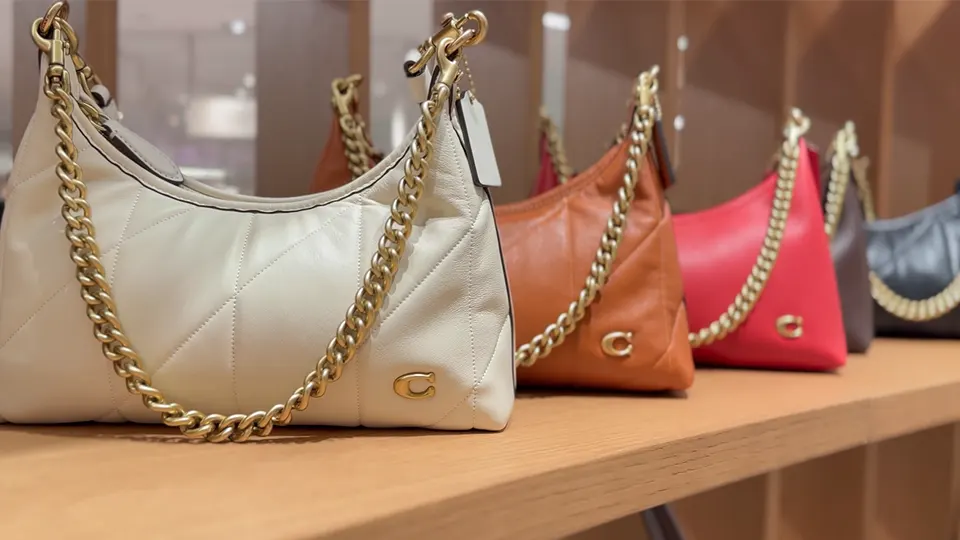
A luxury handbag can pass through a surprisingly long chain before it reaches its owner. It may be assembled at one facility, inspected and tagged at another, stored in a regional warehouse, shipped to a boutique and eventually returned for repair or resale. Keeping track of that product at every stage requires more than a single identification method.
RFID and NFC address different parts of the process. UHF RFID is well suited to warehouse and retail operations, where many products need to be identified quickly. NFC works at much closer range and gives consumers a simple way to interact with an individual product using a smartphone.
For luxury brands, the two technologies can sit within the same product identity system. The choice of tag, chip, antenna and installation method then depends on how and where the product will be handled.
The first job of an RFID system is usually straightforward: give each product a reliable digital identity.
During production, a unique identifier can be associated with the product’s SKU, color, size, production batch and manufacturing information. That identity can follow the item through subsequent warehouse and retail operations without requiring staff to manually record every movement.
UHF RFID becomes particularly useful once products start moving in volume. A warehouse employee may need to receive hundreds of handbags, pairs of shoes or garments in a single shipment. Reading individual barcodes one by one takes time and requires the label to be visible. RFID allows products to be identified without the same line-of-sight requirement.
Common warehouse and retail applications include:
The choice of RFID chip is only one part of the design. Impinj M730, for example, provides 128 bits of EPC memory and a published read sensitivity of up to -24 dBm. The M750 provides 96 bits of EPC memory together with 32 bits of user memory. For serialized retail products, these specifications provide plenty of room for the product identity itself, while additional information can remain in the brand’s backend system.
That backend connection is important for luxury goods. There is little reason to store an entire product history inside the RFID chip. A unique EPC can point to a database record containing manufacturing details, warehouse movements, store information and service records.
The physical tag still needs to work on the actual product. Leather, metal fittings, magnetic closures, textile layers and curved surfaces can all affect UHF performance. A tag that reads well on a sample sheet may behave differently once it is sewn into a handbag or placed next to a metal buckle.
Tag placement should therefore be decided during product development rather than after the RFID hardware has already been selected.
The customer’s interaction with the product is very different from a warehouse inventory operation.
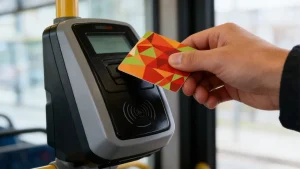
A shopper is unlikely to carry a UHF reader into a boutique. A smartphone with NFC, however, is already in the customer’s hand. This makes NFC useful for product registration, authentication, after-sales services and access to product information.
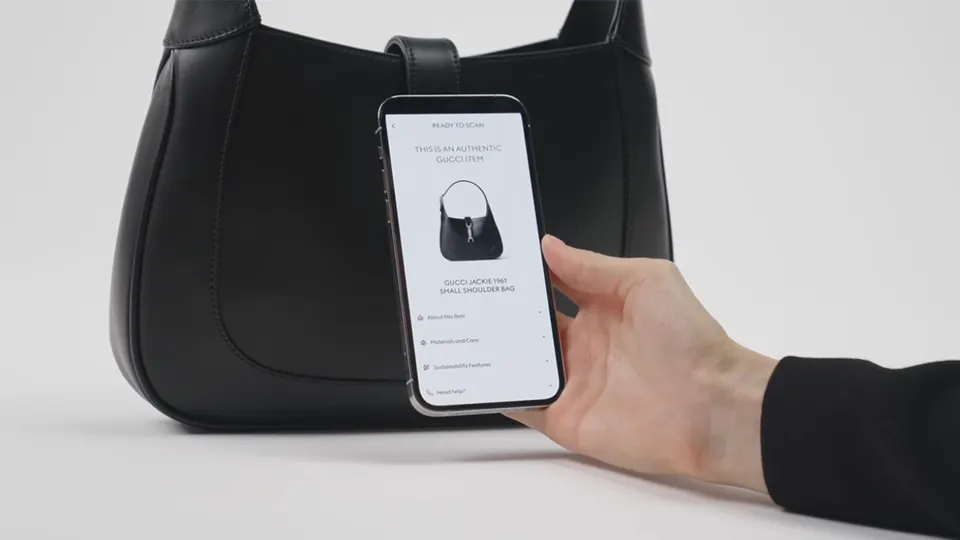
NFC operates at 13.56 MHz and is designed for short-range communication. A customer generally needs to bring the phone close to the tag, which also makes deliberate product interaction easier to control.
A basic NFC application may simply connect a product to a brand-controlled webpage. Depending on the system, the customer could see product information, care instructions, warranty details or registration options.
NXP NTAG 213 is one example of a widely used NFC tag IC. It provides 144 bits of EEPROM memory, supports up to 100,000 write cycles and has a specified data retention period of 10 years. A compact product tag such as the DTB-N002 Label uses an NTAG 213 chip, operates at 13.56 MHz and has a specified reading range of 1–3 cm.
That level of NFC functionality is sufficient for many straightforward product-identification applications. More demanding authentication systems require additional security.
NXP NTAG 424 DNA adds AES-128 cryptography and secure messaging capabilities, with 416 bytes of memory and a maximum data rate of 848 kbit/s. Rather than relying solely on a fixed identifier or URL, the tag can participate in an authentication process between the physical product and the brand’s digital system.
The customer experience can still remain simple. The technical complexity stays behind the smartphone interaction.
Using RFID and NFC on the same product does not mean creating two unrelated identities.
A handbag, for example, can have a UHF RFID tag for warehouse operations and an NFC tag for customer interaction. Both can be associated with the same product record while remaining technically independent.
The UHF tag may be read dozens of times as the product moves between production, warehouse and retail locations. The NFC tag may only be read when a customer registers the product, checks its authenticity or requests an after-sales service.
A typical workflow can be organized like this:
This arrangement also gives the brand more freedom when designing the physical tags. The UHF antenna can be placed where it has the best chance of achieving stable reads during inventory operations. The NFC tag can be hidden inside a label, lining or other discreet location where a smartphone can still reach it.
The two technologies do not have to use the same physical construction either. A flexible NFC inlay may suit a small area inside a leather product, while a larger UHF inlay may be better suited to a hangtag or another location with more available space.
Product testing should cover the finished item. The material stack, adhesive, stitching, metal components and final tag position all form part of the RF environment.
Putting an RFID or NFC tag on a luxury product does not, by itself, make the product counterfeit-proof.
A fixed identifier can potentially be copied. The same problem exists with a static QR code or a simple NFC link. If a counterfeit item carries information copied from a genuine product, a basic scan may still lead to a legitimate-looking webpage.
Authentication needs a relationship between the physical tag and the brand’s backend system. Depending on the security level required, the system can check the product identifier, activation status, authentication history and other product attributes.
Secure NFC chips provide another layer. NTAG 424 DNA uses AES-128-based security functions, while ST25TA-EB is designed for secure NFC applications involving product authentication and digital signatures.
The authentication process can evaluate several elements:
The physical construction matters here as well. A genuine tag that can be removed easily and transferred to another product creates a different security risk from a tag that is concealed or permanently integrated into the item.
For high-value products, brands may also look at unusual authentication patterns. Repeated scans from unexpected locations, for example, could trigger additional checks. The digital record then becomes useful for monitoring the product after it leaves the original sales channel.
The first sale is only one point in the life of a luxury product.
A handbag may return to the brand for repair several years later. A pair of shoes may enter an authorized resale channel. A watch accessory may change ownership without ever returning to the original boutique.
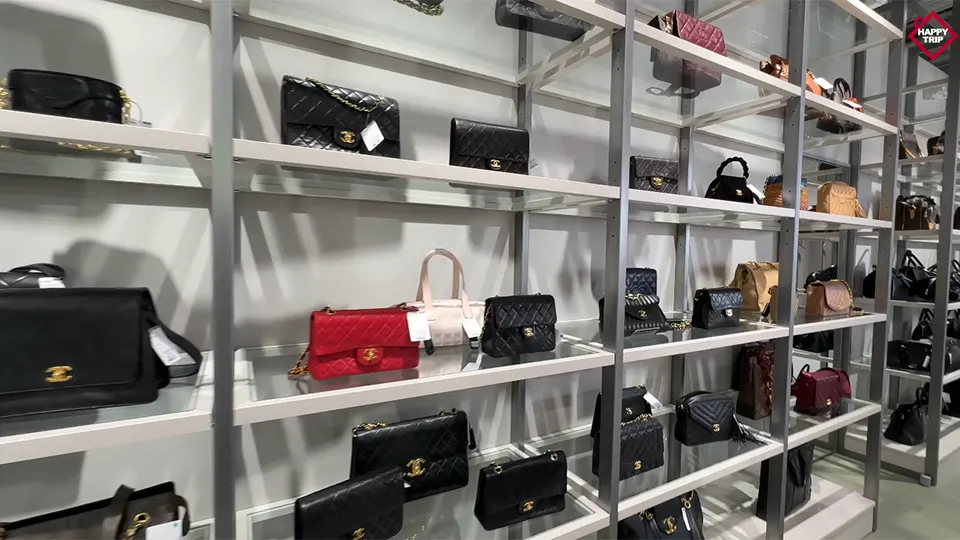
Keeping the product identity active makes these later interactions easier to manage.
At a repair center, RFID can identify incoming products and retrieve the associated service record. NFC can provide a customer-facing route to product information or service registration. In a resale operation, UHF RFID can help process incoming inventory in volume, while NFC can support an individual product check.
This becomes increasingly relevant as brands build systems around repair, reuse and resale. The same digital identity can remain associated with the physical item instead of being replaced whenever the product changes hands.
Digital Product Passport initiatives can extend this approach by linking products with information such as materials, manufacturing data, repair history and other lifecycle information. The RFID or NFC tag does not need to store all of that content. Its role can be to provide a reliable identifier and a controlled path to the relevant digital record.
For the customer, that interaction may take only a few seconds. Behind it sits the product data accumulated during years of production, distribution, ownership and service.
The right RFID and NFC configuration depends on the product, the operating environment and the people who need to use the system.
A brand primarily concerned with warehouse inventory may place most of its emphasis on UHF RFID. A product that needs direct smartphone authentication may put greater emphasis on NFC. Products moving through both complex supply chains and secondary markets can use the two together.
A practical selection process starts with the actual workflow:
For UHF applications, chips such as Impinj M730 and M750 are examples of components used for serialized product identification. On the NFC side, NXP NTAG 213 is suitable for straightforward identification and digital information, while NTAG 424 DNA provides stronger security functions. ST25TA-EB is another option for applications requiring secure NFC authentication.
The final decision should also account for tag size, antenna design, installation position, read distance and the expected number of reads over the product’s service life. A technically capable chip will not compensate for a poorly matched antenna or an unsuitable installation position.
Luxury goods place unusual demands on identification technology because the tag has to work without compromising the product itself. It may need to disappear into a leather lining, survive years of handling, remain readable near metal hardware and still provide a reliable digital identity when the product enters a second or third stage of ownership.
RFID and NFC provide different ways to handle those requirements. UHF RFID keeps products visible to the supply chain, while NFC gives the individual item a practical interface with the person holding it. When the two are connected through a well-designed product identity system, authentication and traceability can continue from the factory floor to the resale market.