
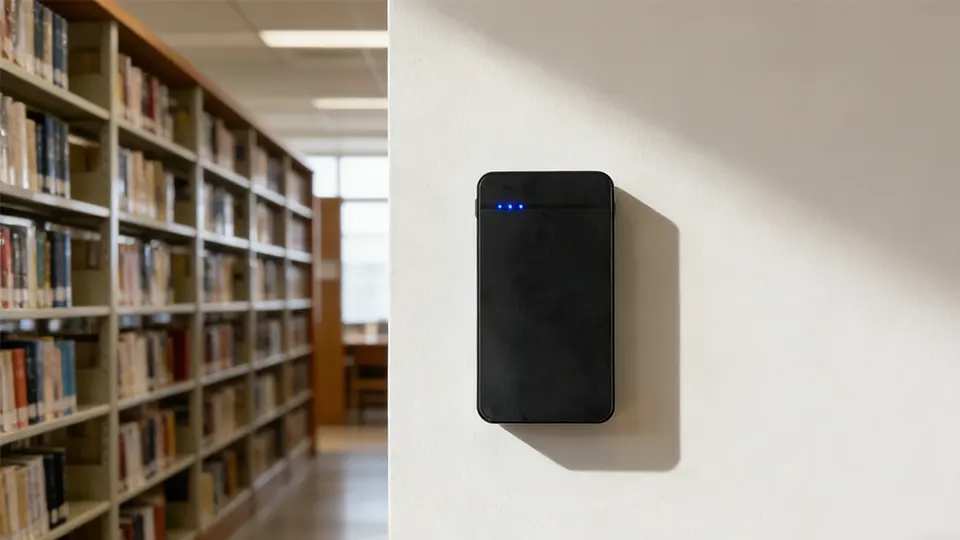
NFC technology has become a backbone for modern contactless systems, offering secure, low‑power wireless communication typically under ten centimeters. NFC operates at 13.56 MHz and supports standardized tag interaction protocols, making it widely used in access control, inventory management, asset tracking, event check‑in systems, and logistics automation. NFC systems are preferred when proximity, security, and reliability are essential. Successful implementation requires not only an understanding of NFC fundamentals but also careful selection and deployment of the right reader hardware for specific environments. Hardware choices influence system accuracy, consistency, and scalability.
In this article, we explore three major categories of NFC readers—desktop readers, Bluetooth readers, and handheld terminals—and provide practical deployment strategies that yield dependable performance across diverse industry use cases.
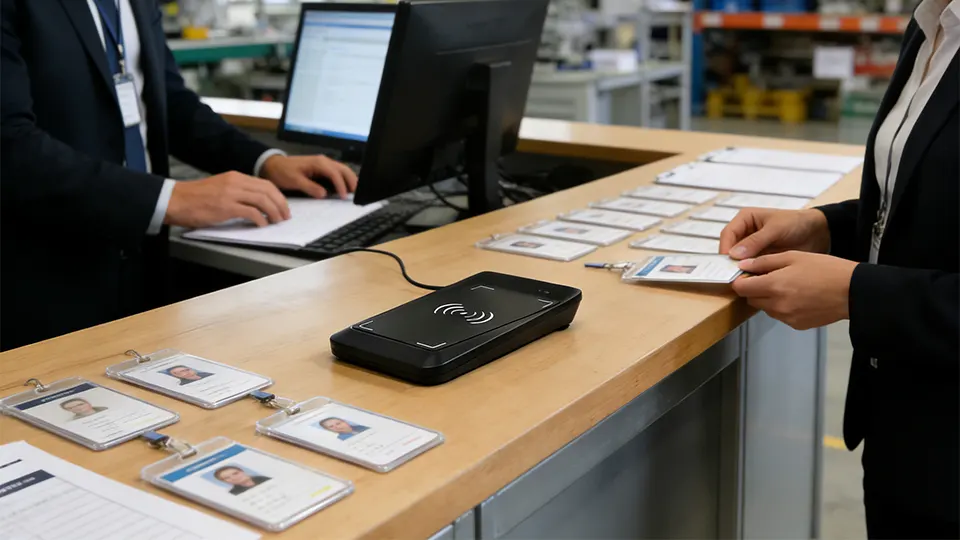
Desktop NFC readers are fixed, USB‑powered devices designed for stationary NFC operations, such as card issuance, badge programming, membership verification, and access control at fixed points. The DTB‑DR100 HF Desktop NFC Reader is a representative model in this category. It operates at 13.56 MHz with a built‑in antenna and provides a typical reading range of approximately three to seven centimeters, depending on tag size and quality. Communication with host systems is achieved via a USB virtual serial port interface.
One of the most common challenges in NFC projects is turning the concept into a seamlessly functioning system. Desktop readers like the DTB‑DR100 often serve as the entry point for NFC technology in many enterprises because of their ease of integration and dependable baseline performance. However, simply connecting a reader to a USB port does not guarantee operational success. The real validation occurs when these readers are incorporated into production environments, such as employee badge issuance desks or visitor check‑in stations at service counters.
In practical deployments, desktop readers need to operate reliably as part of a larger software ecosystem. This often includes interactions with backend databases that track user credentials, session logs, and access privileges. When workflow volumes increase, the reader must maintain fast read and write operations without latency, even under continuous use. Integrators need to balance hardware constraints with the complexities of software systems to harmonize data flow, error handling, and speed.
USB Integration: Ensure that the USB driver is correctly installed and that the device is recognized as a virtual COM port for seamless communication with desktop applications.
Antenna Orientation: Position the reader flat with an unobstructed field of view. Avoid metallic surfaces or crowded setups that could interfere with signal reception.
Batch Operations: For high‑volume card issuance, implement efficient queueing and error recovery logic to minimize failures during read/write cycles.
Desktop readers are especially effective where NFC interactions are predictable, repetitive, and do not require mobility.
Bluetooth NFC readers extend the capabilities of NFC deployments by introducing wireless connectivity. The DTB‑BR100 Bluetooth HF Reader is an example of a mobile NFC reader that operates at 13.56 MHz with built‑in antenna and battery power. It supports communication via Bluetooth, enabling flexible use with tablets, laptops, or other host devices without requiring a physical USB connection.
Bluetooth NFC readers like the DTB‑BR100 excel in environments where mobility is essential. In large warehouses, open‑air logistics hubs, or temporary event spaces, fixed USB readers are impractical. Portable Bluetooth readers bridge this gap by connecting wirelessly to host devices, enabling workers to walk aisles, verify inventory, or authenticate credentials on the move.
However, Bluetooth connectivity introduces additional considerations. Beyond basic pairing, systems must ensure stable communication under variable conditions. Bluetooth interference, battery depletion, and unexpected disconnects are common real‑world obstacles. Successful deployments incorporate frequent connection health checks, battery monitoring, and robust reconnection logic. Designs should anticipate intermittent wireless behavior and maintain operational continuity even when connection quality fluctuates.
Mobile Asset Verification: Use Bluetooth readers for inventory spot checks across large facilities without relocating fixed stations.
Temporary Access Points: Deploy Bluetooth readers at event entry points or temporary checkpoints where cabling is not feasible.
Field Identity Checks: Pair with tablets or laptops to perform authentication tasks in clinics, retail floors, or remote facilities.
Bluetooth readers provide a mobile NFC solution without the complexity of full handheld systems, offering flexibility in dynamic operational environments.
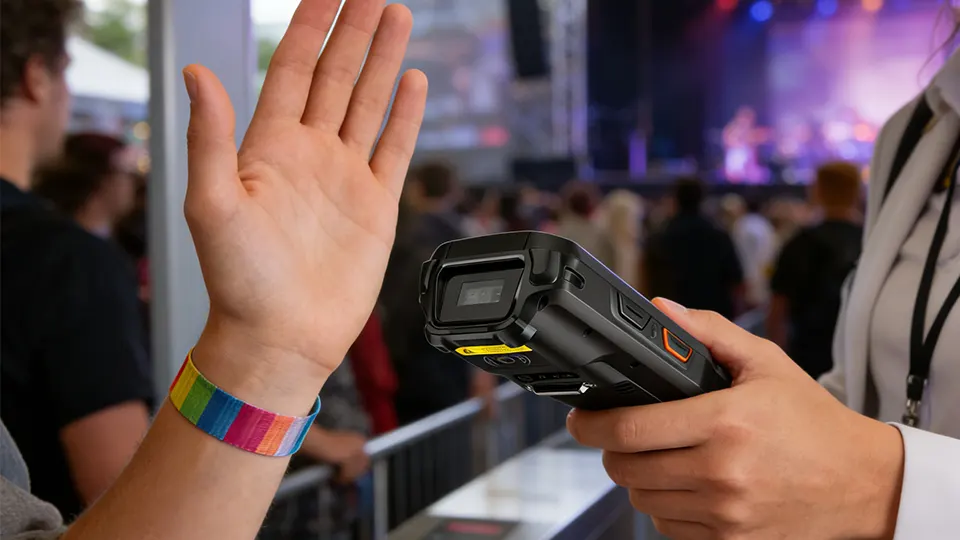
Handheld terminals combine NFC reading capability with the computing power and connectivity of a mobile device. The DTB‑D30 HF Handheld Terminal integrates NFC/RFID functions within an Android operating system platform, along with additional communication modules such as Bluetooth, Wi‑Fi, GPS, and cellular connectivity. These devices are purpose‑built for continuous mobile operations and rugged field use.
Handheld terminals represent the most versatile category of NFC reader hardware. Unlike stationary or Bluetooth readers, handhelds are fully self‑contained computing devices designed for extended use across complex workflows. In environments such as distribution centers or outdoor facilities, a handheld terminal becomes the primary interface for data capture, synchronization, and user feedback. These devices support advanced workflows, including real‑time validation, multi‑tag anti‑collision handling, offline data caching, and asynchronous upload once connectivity is restored.
In addition to NFC functions, handheld terminals like the DTB‑D30 often include barcode scanning, high‑speed wireless connectivity, and robust physical design. This enables a single device to replace multiple single‑purpose scanners, simplifying IT support while reducing hardware sprawl. Field technicians can run diagnostics, perform audits, and gather data with high accuracy and minimal disruptions.
Anti‑Collision Handling: Develop application logic that supports flicker‑free scanning and correct anti‑collision responses when multiple NFC tags are nearby.
Offline Caching and Sync: Implement local caching for use in areas with limited connectivity, and support asynchronous data synchronization with backend systems.
Operator Training: Train field operators in ergonomic scanning practices to improve scanning speed and reduce repetitive strain.
Handheld terminals offer the highest level of operational flexibility, particularly for continuous scanning and data collection in large or varied environments.
Deploying NFC systems successfully requires alignment between reader capabilities and tag types. NFC readers typically support standards such as ISO 14443 and ISO 15693, enabling compatibility with a broad range of passive NFC tags. Tag size, orientation, and material can affect reading performance, so it is important to test tag and reader combinations in representative environments. Misalignment between reader protocols and tags often results in inconsistent reads or failed operations. Pre‑deployment testing helps surface compatibility issues early and avoid costly retrofits.
Even with quality hardware like the DTB‑DR100, DTB‑BR100, and DTB‑D30, real deployments face practical challenges:
Inconsistent Reading Distance: Environmental interference or poorly positioned antennas can reduce effective read range.
Bluetooth Instability: Wireless connections in crowded RF environments may experience noise or dropouts.
Collision Issues: When multiple tags are present, anti‑collision protocols must be implemented to prevent read failures.
Environmental Constraints: Extreme temperatures, moisture, or electromagnetic noise can impact performance.
To mitigate these risks, conduct environment‑specific stress tests and incorporate error handling, retries, and fallback procedures into application logic.
Office Operations:
Desktop readers are ideal for badge issuance and visitor management at reception desks. Bluetooth readers support guest process checkpoints. Handheld terminals streamline internal auditing and equipment checks.
Warehousing and Retail:
Handheld terminals are commonly used for inventory scanning and fulfillment verification. Bluetooth readers assist with opportunistic scanning during stocktakes. Desktop readers serve fixed receiving desks.
Healthcare:
Handheld terminals track consumables, equipment, and patient‑centric assets. Desktop readers validate credentials at nursing stations or administration desks. Bluetooth readers provide mobile scanning support across wards.
Plan According to Workflow: Match reader types to operational needs rather than arbitrary hardware specifications.
Pilot Test Early: A small‑scale pilot reveals environment‑specific obstacles.
Train Operators Thoroughly: Well‑trained staff improve throughput and reduce errors.
Monitor Continuously: Establish methods to monitor device health and performance.
Integrate Robust Error Handling: Implement retries, logging, and user feedback for seamless operations.
Choosing the right NFC reader is a strategic decision that significantly influences the success of any NFC deployment. The DTB‑DR100 desktop reader provides efficient performance for fixed workstations, the DTB‑BR100 Bluetooth reader delivers wireless flexibility for dynamic workflows, and the DTB‑D30 handheld terminal offers comprehensive mobile data capture in demanding field environments. By aligning hardware capabilities with operational requirements and deploying with careful testing and training, organizations can achieve reliable, scalable, and efficient NFC solutions tailored to real‑world needs.