Retail success is rarely determined by product quality alone. Modern consumers expect every stage of the shopping journey to feel fast, convenient, and reliable, especially when they reach the checkout counter. Even after spending time comparing products, asking questions, and filling a shopping basket, many customers still reconsider their purchase during payment. Long queues, slow terminals, complicated payment steps, and unexpected delays create unnecessary friction that directly affects completed transactions.
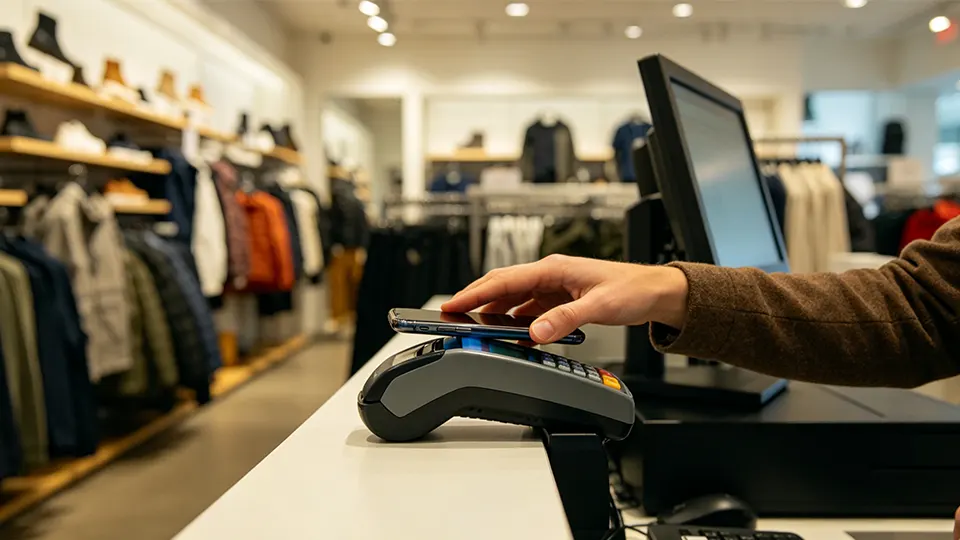
Mobile tap-to-pay technology has become one of the simplest ways to remove this friction. Using NFC (Near Field Communication), shoppers can complete secure transactions by holding a smartphone close to a compatible payment terminal. The entire process often takes less than two seconds, creating a noticeably smoother experience than traditional chip-and-PIN transactions or QR-code-based payments.
This improvement is not only appreciated by customers. Retail operators benefit from faster checkout cycles, improved staff productivity, stronger customer loyalty, richer transaction data, and measurable revenue growth.
Many retail businesses focus heavily on attracting customers into the store but underestimate the financial impact of the final thirty seconds before payment. Checkout is the last opportunity to complete a sale, and every unnecessary action increases the possibility of hesitation. Waiting for a payment terminal to respond, inserting a physical card, entering a PIN, or searching for cash may only add several seconds individually, yet these small delays accumulate throughout the day.
Industry observations show that shoppers begin to perceive waiting negatively after approximately 90 seconds in a checkout queue. Once waiting exceeds three minutes, abandonment rates increase significantly, particularly during lunch hours, weekends, and seasonal promotions. In busy convenience stores processing 400 to 600 transactions daily, even a reduction of eight seconds per transaction can save nearly one hour of checkout time every business day.
Mobile tap-to-pay changes this equation by eliminating unnecessary interactions. Customers simply authenticate their payment using facial recognition, fingerprint verification, or device credentials before bringing the phone near an NFC-enabled POS terminal. Communication follows the internationally recognized ISO/IEC 14443 standard, while payment credentials are protected through tokenization defined by EMVCo, ensuring that actual card numbers are never transmitted during the transaction.
This streamlined experience benefits both experienced shoppers and first-time visitors. Consumers no longer need to locate a wallet, insert a payment card, or manually launch a banking application in many cases. For retailers, fewer operational steps translate directly into shorter queues, higher customer throughput, and fewer abandoned purchases during peak business hours.
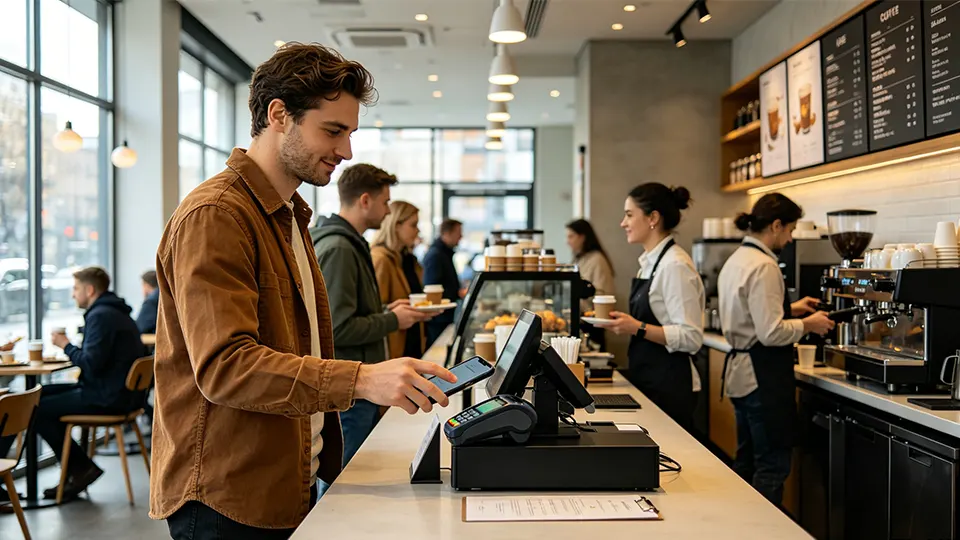
The impact becomes even more visible in environments where speed influences buying decisions. Coffee shops serving commuters before work, airport retail stores handling travelers with limited boarding time, and fashion boutiques operating during weekend promotions all experience periods where every additional second affects customer satisfaction. Removing payment friction does not change product pricing, yet it often changes how many customers successfully complete their purchases before leaving the store.
Customer behavior changes when payment becomes almost effortless. Purchasing decisions are emotional as well as rational, and hesitation often appears during the final stage of the shopping journey. A payment experience that feels immediate reduces the opportunity for second thoughts, helping more shoppers complete transactions they have already decided to make.
Retail studies consistently demonstrate that stores introducing contactless payment options achieve measurable improvements in checkout performance. Businesses frequently report 6% to 15% higher transaction completion rates, while average checkout time decreases by 25% to 40%, depending on store format and payment infrastructure. In smaller convenience stores where average basket values range between US$12 and US$28, these seemingly modest efficiency gains accumulate into substantial annual revenue improvements.
Several operational improvements commonly appear after mobile tap-to-pay deployment:
The influence extends beyond checkout speed alone. Consumer psychology research has repeatedly shown that purchasing momentum is strongest immediately after product selection. Every additional task introduced during payment creates another opportunity for customers to reconsider optional purchases. Accessories, beverages, snacks, cosmetics, and promotional products often rely on spontaneous buying decisions. When payment requires minimal effort, these additional items are more likely to remain in the shopping basket.
Retailers also observe improvements during promotional campaigns. Flash discounts lasting only a few hours frequently attract concentrated customer traffic. Traditional payment systems may become bottlenecks under these conditions, while NFC-enabled checkout allows stores to maintain consistent service speed even as customer volume increases by 30% or more compared with normal trading periods.
Another important advantage involves payment reliability. Contactless mobile wallets from Apple Pay, Google Pay, and Samsung Wallet authenticate transactions through secure hardware and biometric verification before payment authorization occurs. This approach reduces input errors commonly associated with physical card handling while maintaining compliance with financial security requirements established by global payment networks including Visa, Mastercard, and American Express.
For international retailers, offering familiar mobile payment options also improves the shopping experience for overseas visitors. Tourists increasingly rely on smartphones rather than carrying multiple physical cards or large amounts of cash. Supporting globally recognized NFC payment ecosystems removes uncertainty during checkout and encourages higher spending among international customers who expect contactless payment to be available wherever modern retail services are offered.
The benefits of mobile tap-to-pay extend far beyond customer convenience. From an operational perspective, checkout efficiency influences staffing requirements, queue management, store layout planning, inventory replenishment, and overall profitability. A payment terminal is not merely a device for collecting money; it represents one of the busiest operational touchpoints inside a retail environment.
Managers often evaluate sales performance by focusing on foot traffic or average transaction value, yet checkout capacity deserves equal attention. A store capable of processing customers more quickly effectively increases its selling capacity without expanding retail space. During seasonal events such as Black Friday, holiday shopping periods, or weekend promotions, this hidden capacity becomes particularly valuable.
Retail operators commonly identify three measurable operational improvements after implementing NFC-enabled mobile payments:
Modern payment infrastructure is no longer limited to authorizing transactions. Every contactless payment generates valuable operational data that helps retailers understand how customers shop, when they shop, and what encourages them to return. When NFC payment platforms are connected with customer relationship management systems, inventory software, and loyalty programs, payment becomes the beginning of a much broader digital workflow instead of the final step of a purchase.
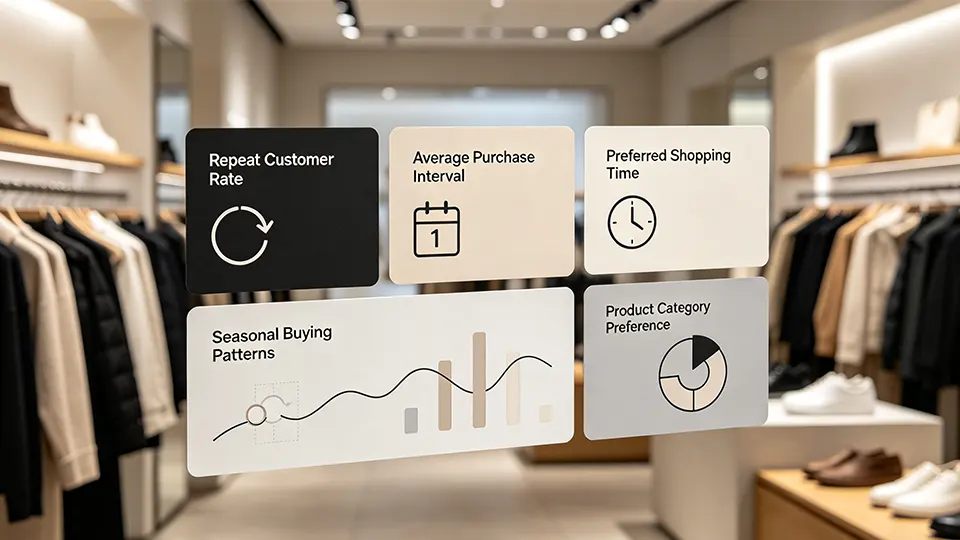
Each completed transaction can automatically associate purchase history with a customer profile after permission has been granted. This allows retailers to measure repeat visits, average purchase intervals, preferred shopping hours, seasonal buying habits, and category preferences. A clothing retailer, for example, may discover that customers purchasing premium jackets are significantly more likely to return within 45 days to purchase matching accessories. A convenience store may identify that beverage sales increase by 18% during the morning commute but decline sharply after midday. These insights support more accurate merchandising decisions than intuition alone.
NFC payment also simplifies loyalty enrollment. Traditional membership programs often require customers to complete paper forms, download applications, or scan QR codes before earning rewards. Those extra steps reduce participation rates because many shoppers simply choose not to register. Contactless payment allows loyalty identification to occur almost instantly, making reward collection feel like part of the purchase rather than a separate task. Retailers introducing this simplified experience frequently report 10% to 20% higher loyalty participation, while repeat purchase frequency improves over the following months.
The quality of transaction data also improves inventory planning. Sales information arrives in real time, allowing replenishment systems to respond more quickly to changing demand. Products experiencing unexpected sales growth can be reordered before shelves become empty, reducing lost sales caused by stock shortages. Faster inventory visibility also supports dynamic pricing strategies, promotional planning, and regional assortment optimization across multiple store locations.
This digital ecosystem becomes even more powerful when NFC payment works alongside NFC tags and RFID identification. Product authentication, inventory tracking, customer engagement, and payment can all operate within a connected environment built around the same communication technology. The result is a continuous information flow from shelf to payment instead of isolated technology systems that cannot exchange data efficiently.
Security remains a critical factor throughout this process. Modern NFC payment platforms rely on tokenization, encrypted communication, secure hardware elements, and biometric authentication. Even if payment information were intercepted, the transmitted token cannot be reused to perform another transaction. This architecture significantly reduces fraud exposure compared with traditional magnetic stripe cards while maintaining a payment experience that feels almost effortless to consumers.
The business value extends beyond operational efficiency. Better transaction intelligence allows retailers to measure campaign performance with greater precision, evaluate promotional return on investment, and identify customer segments that generate the highest lifetime value. Instead of relying solely on monthly sales reports, decision makers gain continuous visibility into purchasing behavior, enabling faster adjustments to marketing strategies and merchandising plans.
Not every retail environment experiences identical benefits from contactless payment, yet several industries consistently achieve faster returns because transaction speed directly influences customer satisfaction and daily sales capacity.
The strongest results are typically observed in the following environments:
Although these businesses differ in product assortment, they share one operational characteristic: every additional customer served during busy periods represents immediate revenue that cannot be recovered later if the opportunity is missed.
Retail operators evaluating contactless payment investments generally focus on several measurable performance indicators before and after implementation:
Monitoring these indicators over a period of three to six months provides a clear picture of operational improvement. Many retailers discover that the financial return is generated not by a single dramatic increase in sales, but by hundreds of small efficiency gains repeated throughout every trading day. Saving six seconds during each of 500 daily transactions produces more than 50 minutes of additional checkout capacity. Across an entire year, those recovered minutes represent thousands of extra customer interactions without increasing store size or payroll.
Customer expectations also continue to evolve. Contactless payment has become a familiar experience rather than a premium feature. Consumers increasingly expect to pay with smartphones, smartwatches, or other NFC-enabled devices regardless of whether they are purchasing groceries, apparel, cosmetics, or electronics. Retailers unable to support these payment preferences risk appearing outdated even when product quality remains competitive.
Another important consideration involves international visitors. Mobile wallets have become widely adopted across Europe, North America, and many Asian markets. Tourists entering a store often look for the familiar contactless payment symbol before deciding how to pay. Supporting globally recognized NFC payment standards reduces uncertainty and creates a smoother shopping experience for travelers who may not carry local currency or physical payment cards.
As NFC technology continues to mature, compatibility between payment systems, digital loyalty programs, inventory management platforms, and customer engagement applications will become increasingly seamless. Retailers investing today are building an infrastructure that supports future digital services without requiring fundamental changes to payment behavior.
Retail growth is often associated with larger stores, broader product ranges, or increased marketing expenditure, yet one of the most effective opportunities exists at the checkout counter. Every unnecessary second introduced during payment reduces operational efficiency and increases the possibility of losing completed sales. Mobile tap-to-pay addresses this issue by making payment almost invisible within the shopping journey, allowing customers to focus on purchasing rather than the transaction itself.
The commercial value extends well beyond faster payments. Higher transaction capacity, stronger customer satisfaction, improved loyalty participation, richer purchasing data, and more accurate operational decisions all contribute to sustainable sales growth.
For retailers seeking measurable improvements without expanding physical space or increasing staffing levels, contactless mobile payment represents one of the most practical investments available. When payment becomes faster, shopping becomes easier. When shopping becomes easier, customers complete more purchases, return more frequently, and build stronger confidence in the retail experience. Over time, those small improvements accumulate into significant gains in revenue, operational efficiency, and long-term customer loyalty.