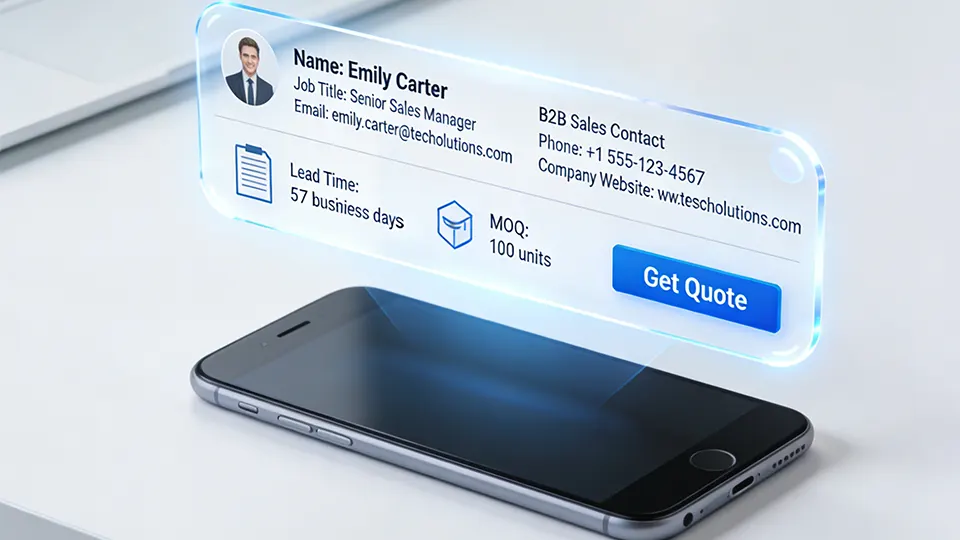
NFC digital business cards are often positioned as a “paperless upgrade.” That’s technically true, but it misses the real point for teams. In enterprise sales, distribution, manufacturing, and solution-based industries, the business card itself has never been the problem. The problem is what happens after the card exchange: contact details get outdated, follow-ups get delayed, leads don’t enter CRM, and marketing can’t attribute pipeline back to offline conversations. A well-designed NFC digital business card isn’t a gadget—it’s a structured workflow that turns a short offline interaction into a measurable online path: Tap → Landing Page → Proof → CTA → Lead Capture → CRM → Follow-up. If your system stops at “tap opens a page,” you’ll get taps, not pipeline.
In the field, the failure pattern is predictable: companies buy NFC cards, encode a generic profile link, and assume the job is done. Then sales reps stop using them because “it doesn’t really help.” The issue isn’t that NFC doesn’t work—it’s that the system doesn’t create a next step that feels valuable to the prospect. Prospects don’t tap because they want your phone number. They tap because they want something useful: a product catalog, a pricing reference, a case study, a spec sheet, or a direct channel to follow up. If your landing page doesn’t deliver value in the first 5–8 seconds, the tap becomes a dead end. That’s why the most successful NFC deployments look less like “digital cards” and more like a lightweight lead funnel designed for real-world sales behavior.

If you’ve worked in sales long enough, you know the real enemy is not “lack of leads,” it’s lost momentum. A prospect meets you at a trade show, takes a card, and then gets pulled into ten other conversations. By the time they’re back at the hotel, your card is buried in a bag. NFC changes this because it can deliver a structured next step immediately, while the context is still fresh. That’s also where attribution becomes valuable: when the landing page is designed correctly, you can see which content assets prospects actually want (brochure vs. case study vs. pricing request) and which sales reps are generating meaningful engagement—not just collecting business cards. This turns offline networking into something your revenue team can improve over time instead of guessing.
A professional deployment never forces a single behavior. NFC is convenient, but QR is universal. Put both on the same card and treat QR as a conversion safety net, not an “old-school fallback.” In many settings, especially at large exhibitions, the prospect may be holding a bag, walking, or talking to someone else. They might not want to tap, or they might not know where the NFC antenna is on their phone. If you rely on NFC alone, you will lose leads silently. NFC + QR removes that risk and ensures every prospect has a path to your landing page in the moment that matters most.
A good NFC landing page is not a biography. It’s a conversion surface that answers three questions quickly: Who are you? What do you do? What should I do next? The prospect should see a clear value statement, a clean layout, and a small set of CTAs that match early-stage intent. If the page feels cluttered, slow, or overly promotional, people bounce. This is also where many teams accidentally create friction: they upload a 30MB PDF catalog, embed heavy scripts, and build a page that loads slowly on mobile networks. Speed is credibility. A fast page signals competence; a slow page signals chaos.
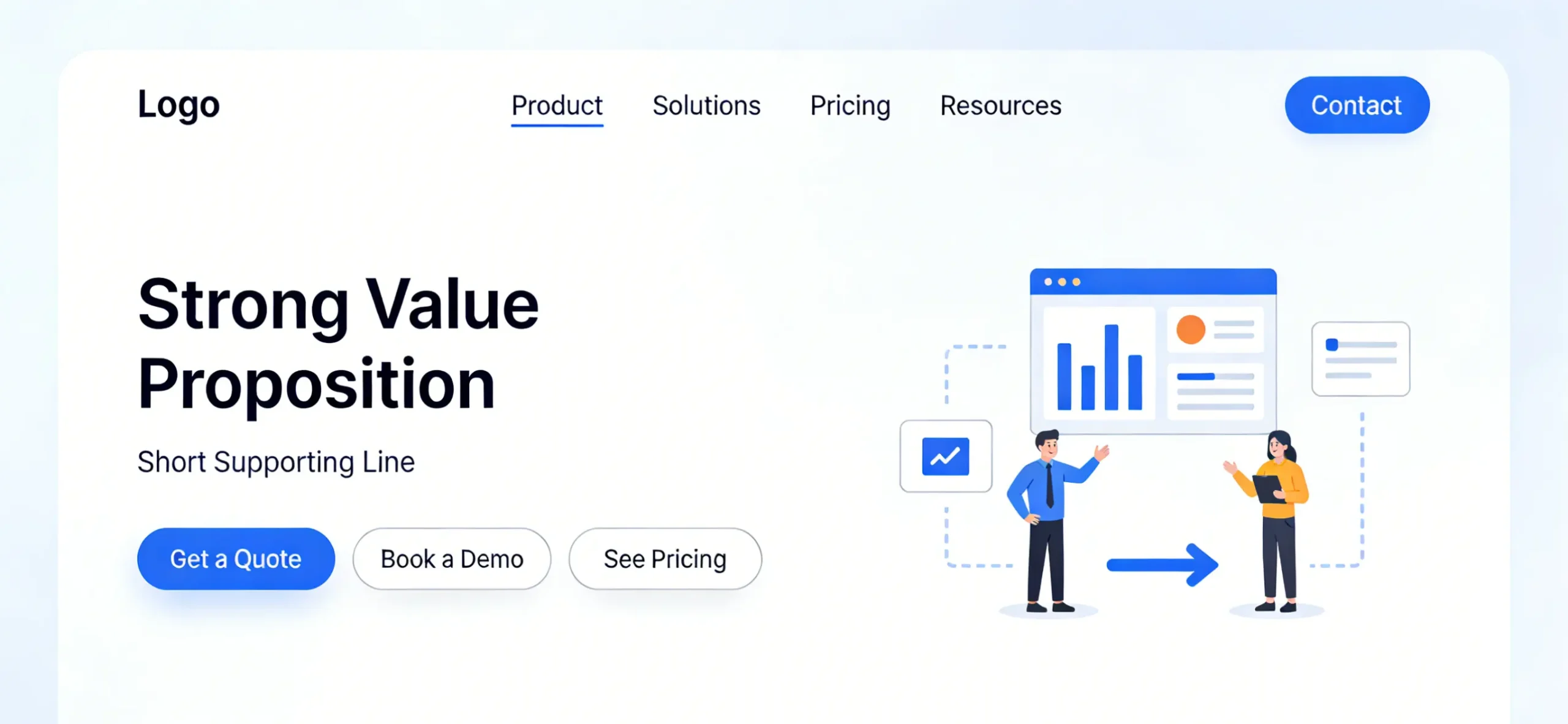
This is a classic mistake: teams add every possible link—website, LinkedIn, YouTube, product pages, catalogs, company history, careers page, certifications, and five contact methods. The landing page becomes a menu, not a funnel. Prospects don’t want ten choices. They want the fastest route to the next useful step. If your page gives them too many decisions, they’ll make the easiest decision: close the page. A tighter CTA set usually increases clicks because it reduces cognitive load. If you want to provide more resources, group them behind one button like “View Resources,” then keep the main CTAs focused on conversion.
Best for: standard URL-based NFC business cards
Why it works: cost-effective, stable, widely compatible
Best for: slightly richer NDEF use cases
Why it works: more memory while staying mainstream
Best for: multi-record NDEF strategies or heavier stored content
Why it works: highest memory in NTAG21x family
Best for: secure workflows (anti-cloning, verified taps)
Why it works: advanced authentication and security features
For most teams, the simplest and best strategy is to encode a URL and manage everything on the landing page. That keeps updates easy and avoids re-encoding cards. This is why NTAG213 is often enough for large deployments: it’s reliable, cost-effective, and compatible. NTAG215/216 are useful if your platform design benefits from more complex NDEF records, but in practice most organizations still prefer URL-based encoding for operational flexibility. NTAG424 DNA is a different class—it’s not about “more memory,” it’s about “trust and verification.” If you’re concerned about cloning or link tampering, or you want a more secure brand interaction, it’s worth considering. Otherwise, it’s often unnecessary complexity for a business card.

Metal NFC cards can be a branding win, but they can also be a conversion killer. NFC coupling is sensitive to metal, and a poorly engineered metal card will behave inconsistently across phones. That inconsistency is what kills adoption. Sales reps won’t “try again later.” If a tap fails once in front of a prospect, many reps will quietly stop using the card and go back to QR or paper. That’s why metal cards require real engineering—proper isolation layers, metal-compatible inlays, and cross-device testing. If you can’t guarantee reliable performance, a well-made PVC card will outperform a premium metal card simply because it works every time.
In one common trade show setup, a mid-sized team (10–15 reps) uses NFC cards that open rep-specific landing pages with UTM parameters tied to the event. Instead of sending prospects to a homepage, the landing page offers a single product brochure, one relevant case study, and a “Request Pricing” CTA that routes to the right region. In practice, this kind of structure usually produces stronger engagement than generic pages because the content matches the context of the conversation. Teams also tend to see that direct messaging CTAs (WhatsApp/WeChat) outperform long lead forms at early stages, while demo bookings become more relevant after follow-up. The biggest operational improvement is not “more taps,” but faster lead routing and clearer follow-up priorities based on CTA behavior.
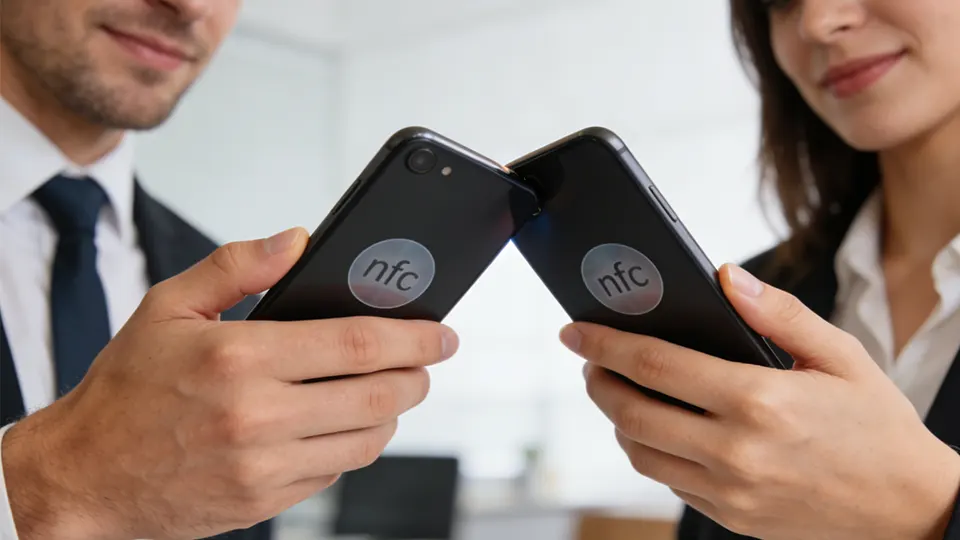
Yes, most modern iPhones can read NFC tags and open URLs smoothly, but user behavior and device settings still vary.
Use both. NFC improves speed and experience; QR ensures universal access.
Yes. For URL-based workflows, NTAG213 is typically sufficient and reliable.
Basic tags can be copied in some cases. For higher security, consider NTAG424 DNA and verified workflows.
Track CTA clicks, lead submissions, and meeting bookings—not just page visits.
NFC digital business cards create value when they’re treated as an offline-to-online conversion layer. They reduce friction, keep contact details up to date, enforce brand consistency, and make lead attribution measurable. But they also have real constraints—device behavior differences, conversion uncertainty, material interference risks, and privacy expectations. The teams that get results build NFC as a system: NFC + QR entry, a landing page designed for intent, a small number of strong CTAs, and a CRM path that prevents leads from disappearing. Done that way, NFC stops being a “cool card” and becomes part of your pipeline infrastructure.