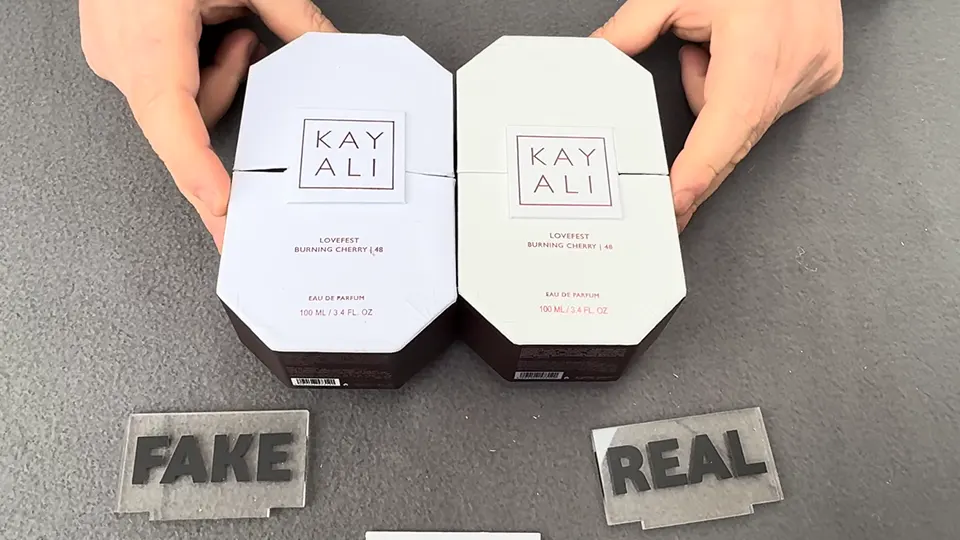
Counterfeit cosmetics can be surprisingly difficult to spot. The packaging may look authentic, right down to the batch code, while the product inside has a completely different origin. For beauty brands selling through distributors and online marketplaces, proving where an individual item came from is becoming an increasingly important part of product protection.
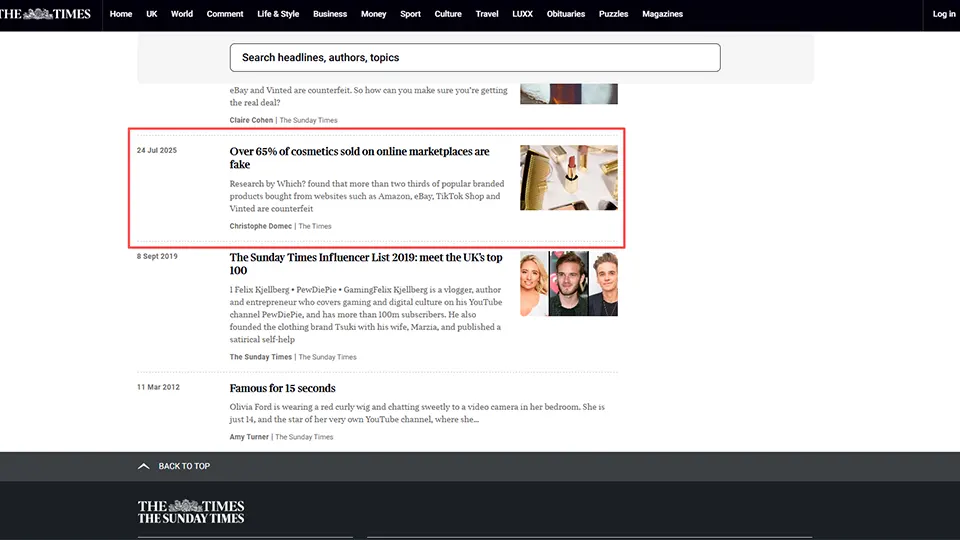
On July 24, 2025, UK consumer group Which? reported that 23 of the 34 cosmetics it purchased from third-party sellers on Amazon, eBay, TikTok Shop and Vinted were likely to be counterfeit. The investigation was a small sample, not a measure of the entire market, but its findings were striking. On September 17, 2026, South Korean authorities announced a separate case involving counterfeit goods sold online. The investigation covered 61 product types, mostly cosmetics and health supplements, with reported sales worth 4.5 billion won between October 2024 and November 2025.
Cases like these raise a practical question for beauty brands: when packaging can be copied and products can change hands several times before reaching a customer, how can the original product be identified and checked? NFC technology offers one way to connect a physical item with a digital record that can be verified through a smartphone.
Packaging imitation has become a serious concern for skincare and makeup brands. Logos, colours, bottle shapes and printed codes can all be reproduced. Some fakes have obvious defects, but others look convincing enough to pass a quick visual inspection. In some cases, the packaging itself may be genuine, with the original contents replaced by an unauthorised formula.
The Which? investigation shows how difficult this can be for shoppers. Four of the 11 products bought from third-party sellers on Amazon were considered likely counterfeits. The figure was eight out of 11 for eBay, five out of six for TikTok Shop and six out of six for Vinted. These results apply only to the products examined, not to every seller or listing on those platforms.
The South Korean case points to the scale that online distribution can reach. Authorities reported 4.5 billion won in sales linked to 61 counterfeit product types, followed by the discovery of additional counterfeit stock valued at 1.3 billion won across 87 varieties in a warehouse. The case involved cosmetics alongside health supplements, rather than cosmetics alone.
For beauty brands, the commercial damage can extend well beyond a lost sale. A counterfeit product can trigger complaints, undermine confidence in the brand and expose consumers to ingredients or manufacturing conditions the brand has never approved. Several weak points deserve particular attention:
NFC can help address these problems, but the result depends on how the tag, product database and verification process are designed.
An NFC tag contains a small integrated circuit and an antenna. It operates at 13.56 MHz and communicates with a compatible smartphone over a short distance. Because a passive NFC tag does not require its own battery, it can be incorporated into a label or package without adding a powered component.
When a customer taps the product, the phone can open a webpage or send information to an authentication service. That interaction is straightforward, but opening a brand website is not the same as proving that a product is genuine. A tag holding a fixed URL can be copied, and a copied tag may lead to exactly the same page as the original.
A unit-level authentication programme generally works through four steps:
The distinction between identification and authentication matters. A unique serial number can help a brand track individual products, but it does not automatically prevent copying. If a counterfeit item carries a duplicated number, the backend needs a way to recognise suspicious use.
Repeated scans from distant locations, for example, may indicate that a code has been copied. They may also reflect legitimate resale, travel or cross-border purchasing. Such activity should trigger further checks rather than an automatic accusation of fraud.
Stronger authentication uses cryptographic features that allow the verification service to check more than a static number. The chip, encoding process, security keys and backend must all be configured correctly. Without those controls, even an NFC label on expensive packaging may offer little more than a convenient link.
NXP NTAG213 is widely used in NFC labels for product information and straightforward smartphone interactions. It provides 144 bytes of user memory, with a specified data retention period of ten years and write endurance of 100,000 cycles. These characteristics make it suitable for storing a compact URL or linking a customer to product details, registration and after-sales information.
Those specifications should not be confused with high-security authentication. NTAG213 can support product identification, but a basic implementation built around a fixed URL does not provide the same protection as a cryptographic authentication system.
For products that need stronger protection against copied identifiers, NXP NTAG 424 DNA offers a different level of functionality. It provides 416 bytes of memory and supports AES-128 cryptography, secure messaging and Secure Unique NFC (SUN) authentication. SUN allows a changing authentication message to be generated during a tap, giving the backend information it can validate rather than relying solely on a permanent identifier.
The choice should reflect the product’s value, distribution risks and the consequences of a false authentication result. A basic NFC label may be adequate for a body lotion linking to usage instructions. A premium serum sold through several distributors may warrant cryptographic verification, particularly if the brand has documented counterfeiting problems.
Tamper evidence requires separate consideration. NXP NTAG 424 DNA TagTamper supports detection of a conductive tamper loop, allowing the system to respond to a change in the seal’s state. This can be useful for packaging where unauthorised opening or refilling is a concern. It does not establish the safety or composition of the contents; it reports a condition that the tag and packaging have been designed to detect.
The main options serve different purposes:
Choosing the IC before defining the authentication requirement can lead to unnecessary cost or insufficient protection. The intended function should guide chip selection, not the other way around.
Even a well-chosen chip may perform poorly if the label is unsuitable for the finished package. Antenna dimensions, adhesive, surface curvature and nearby materials all affect reading performance. A flat paper carton presents different design considerations from a curved glass perfume bottle or a cream jar with metallic decoration.
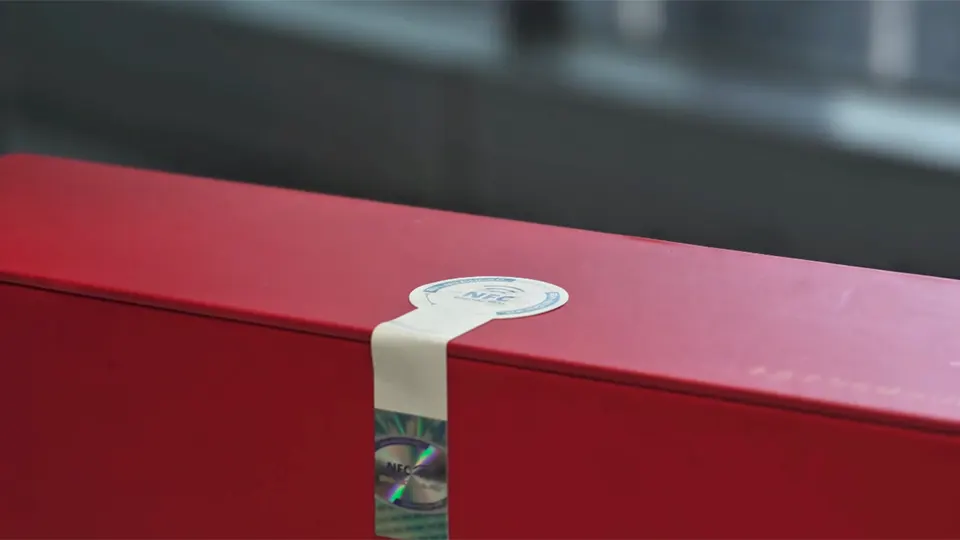
Placement matters as well. Customers need to know where to tap, and the label must remain readable when the package is held naturally. A tag hidden beneath a thick fold or placed too close to metal may be inconvenient to use. Packaging teams should consider the location of the label early enough to avoid redesigning artwork or tooling later.
DTB RFID’s DTB-N002 Label uses an NXP NTAG213 IC and operates at 13.56 MHz. Its specifications list a 40 mm label diameter, a 35 mm antenna diameter and a reading range of 1–3 cm. The label provides a useful reference for conventional NFC packaging applications, although actual performance depends on the finished package, the phone and the surrounding materials.
Testing should take place on production-equivalent samples rather than on a bare tag. Brands should try different compatible phones, tap positions and handling conditions, recording successful reads and failed attempts. The same checks should be repeated after the label has been applied to the intended bottle, carton or jar.
Tamper detection needs its own validation. The seal, adhesive, antenna and opening mechanism must work together, and the system should respond correctly when the package is opened. A standard NFC sticker cannot report a broken seal unless it has been specifically designed for that purpose.
Authentication is a practical reason to add NFC, but it need not be the only one. Once the tag connects a product to a reliable digital record, the brand can also provide information that customers may need throughout the product’s life.
Depending on the application, the landing page can show the product name, size, batch reference and authentication status. It may also provide application instructions, storage advice, approved ingredient information, product registration or links to customer support. For brands offering refill programmes, the same interaction can direct customers to compatible refills or explain local disposal options.
The content must be accurate and clearly presented. A page stating that a product is genuine should explain what was actually verified. A recognised serial number alone does not establish that the contents are authentic, and a successful NFC read cannot confirm that a cosmetic has been stored correctly.
Brands should also consider how scan information will be used. Repeated scans, unexpected locations and invalid identifiers can help identify suspicious activity, but the system needs sensible rules to avoid flagging legitimate customers. Scan records should support investigation and improve the programme, not create confusion around ordinary purchases.
A pilot is usually the most practical way to evaluate the approach before a large packaging rollout:
The results should determine whether the programme is expanded. A tag that reads reliably but connects to outdated product data will disappoint customers, just as a sophisticated authentication chip will have limited value if the brand cannot manage its identifiers and verification keys properly.
For cosmetics brands, NFC is most useful when the physical label and the digital service are treated as parts of the same product experience. The label gives the customer a simple way to access the product’s digital identity; the quality of the verification process determines how much that interaction can be trusted.