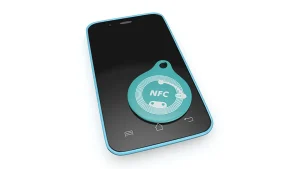

Optical disc assets remain widely used in industries where long-term archival stability is required, especially in broadcasting, healthcare imaging, government archives, and enterprise data backup environments. Despite the growth of cloud storage, physical media still accounts for an estimated 18–25% of cold data storage systems globally, primarily due to compliance and offline accessibility requirements.
Traditional optical disc management relies heavily on manual labeling, spreadsheet tracking, and barcode-based identification. In many enterprise environments, annual loss rates for unmanaged optical discs can reach 5–12%, while inventory audit cycles often require 3–7 working days per 10,000-disc library depending on staffing levels.
NFC technology introduces a structured digital identity layer on top of each disc, enabling fast, contactless identification and real-time asset tracking. This shifts optical disc management from static cataloging into a dynamic lifecycle-controlled system.
At the core of NFC-based disc management is a passive tag embedded or attached to each optical disc. These tags operate at 13.56 MHz and communicate within a short range of 0–4 cm, ensuring controlled access and minimizing accidental reads in dense storage environments.
Common NFC chipsets used in disc management systems include:
In industrial deployments, NFC tags are often paired with backend systems that store full metadata, while the chip itself holds only a unique identifier. This architecture ensures scalability across libraries containing more than 500,000 discs without performance degradation.
A typical implementation uses hybrid encoding models where the NFC tag stores a unique asset ID, while the system database manages metadata such as title, version, storage location, and usage history.
The workflow for optical disc NFC management is designed around lifecycle traceability. A properly implemented system ensures that every interaction with a disc is recorded and verifiable.
Each scan event typically takes less than 0.5 seconds, significantly reducing processing time compared to barcode scanning, which averages 2–4 seconds per item in manual workflows.
In large-scale archives, NFC-based workflows can reduce inventory audit time by up to 70–85%, particularly when combined with handheld readers or mobile NFC-enabled devices.

Implementation of an NFC optical disc management system requires structured deployment across hardware, software, and operational layers. A phased approach is commonly adopted to minimize disruption.
During pilot deployments, error rates typically start around 2–4%, primarily due to tag placement inconsistencies or incomplete metadata mapping. After optimization, mature systems often achieve accuracy levels above 99%.
In enterprise deployments exceeding 200,000 optical discs, centralized NFC systems have demonstrated operational efficiency improvements of approximately 40–60% in retrieval and auditing tasks.
A commonly used industrial NFC solution in deployment environments includes the DTB-M002 optical media management module from dtbnfc.com, which integrates tag encoding, database synchronization, and handheld scanning workflows into a unified platform.
One of the most critical aspects of NFC-based optical disc management is data integrity. Unlike barcodes, NFC tags can incorporate authentication layers and encrypted identifiers, reducing the risk of duplication or tampering.
Advanced implementations often rely on secure chipsets such as MIFARE DESFire EV2, which supports AES-128 encryption and multi-application segmentation. This is particularly important in government and healthcare environments, where audit compliance requires strict traceability.
Industry testing shows that NFC-tagged optical disc systems can reduce misidentification errors from 3–6% in barcode systems to below 0.5%, especially in high-density storage racks.
Additionally, NFC systems allow real-time logging of all interactions, enabling complete trace history for each disc across its lifecycle, from creation to retirement.
NFC-based optical disc management is not limited to a single industry but spans multiple operational environments:
In broadcasting environments, retrieval time per disc has been reduced from an average of 90–120 seconds to under 20 seconds using NFC-assisted indexing systems. In healthcare environments, audit compliance time has decreased by approximately 65%, improving regulatory readiness.
Large archives with over 1 million optical discs often report that NFC integration reduces manual labor requirements by nearly 50%, primarily due to automated identification and reduced dependency on manual catalog lookup.

Although NFC-based optical disc management significantly improves operational efficiency, successful deployment depends on several practical considerations.
Environmental factors such as humidity and shelving material can affect read stability, especially when metallic shelving is present. Proper shielding or anti-metal NFC tags are recommended in such cases.
Another key factor is tag placement consistency. Misaligned or improperly adhered tags can reduce scan success rates by up to 15%, particularly in high-density storage environments.
System scalability is also critical. In environments exceeding 100,000 assets, database optimization and indexing strategies become essential to maintain sub-second query performance.
Finally, user training plays a non-trivial role. Studies indicate that proper operator training can improve scanning accuracy from 92% to over 98% within the first 30 days of deployment.
Optical disc NFC management represents a practical bridge between legacy physical media and modern digital asset systems. By introducing unique identifiers, real-time tracking, and structured workflows, NFC transforms optical discs from passive storage units into actively managed digital assets.
When properly implemented, the system delivers measurable gains in efficiency, accuracy, and compliance readiness, while reducing operational overhead across large-scale archival environments.