Football supporters have collected membership cards, match tickets and player memorabilia for decades. These physical objects carry a personal significance that extends well beyond their original purpose. With near-field communication (NFC), the same items can provide access to exclusive content, membership benefits, player interactions and digital experiences throughout an entire season.
The 2026 FIFA World Cup brought this approach to an international audience, while clubs such as Arsenal and Liverpool have incorporated NFC into different aspects of the supporter experience. Sports organisations are increasingly treating physical cards as part of their wider digital infrastructure, connecting stadium attendance, merchandise sales, entertainment and fan engagement.
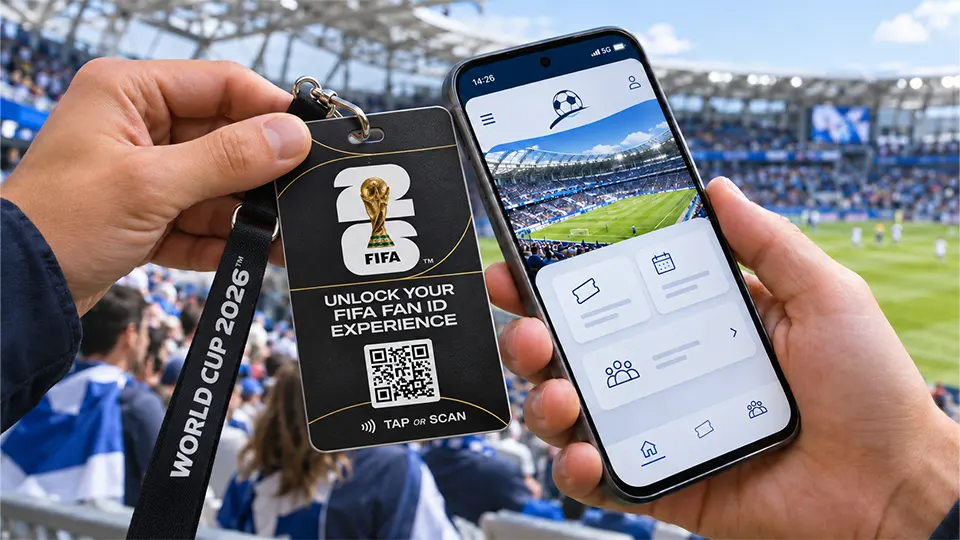
On 22 May 2026, FIFA announced the launch of its physical FIFA Fan ID for the 2026 World Cup. The tournament, hosted across the United States, Canada and Mexico, featured 48 national teams, 104 matches and 16 stadiums. Ticket holders could collect a free, customisable Fan ID card after entering a participating stadium.
Embedded NFC technology allowed supporters to access a dedicated digital experience by tapping the card with a compatible smartphone. The card also included a QR code as an alternative access method, accommodating audiences with different mobile devices.
The FIFA Fan ID brought several aspects of the tournament together:
Unlike a conventional admission ticket, the FIFA Fan ID was intended primarily for engagement and commemoration. Its digital content could be updated throughout the competition without replacing the physical card.
For international sporting events, this format has particular relevance. Supporters often travel considerable distances to attend a single match, while organised fan activities typically last for only a few hours. A physical NFC card provides a connection to official digital content beyond that limited period, while retaining its value as a personal souvenir.
Contactless stadium admission represents a more established application of NFC in professional football. Atlético de Madrid became the first LaLiga club to introduce NFC technology for ticket entry, following an earlier initiative allowing supporters to store digital membership cards in their mobile wallets.
At Anfield, Liverpool FC continues to operate NFC-based digital ticketing during the 2026/27 season. Season ticket holders use an NFC pass stored on a compatible smartphone, with match information automatically updated as the season progresses. Eligible members can also present their pass at official retail stores to receive membership discounts.
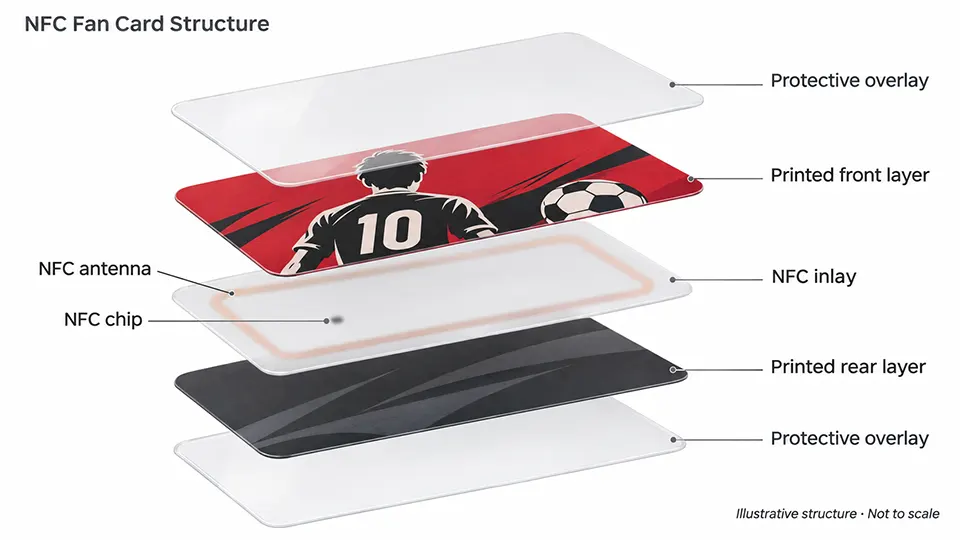
Physical NFC membership cards and mobile NFC passes serve related but distinct purposes within football operations. A physical card contains an embedded chip and antenna, whereas a mobile pass operates through a digital wallet and the smartphone’s NFC hardware.
Depending on the supporting ticketing and membership infrastructure, these credentials can connect several activities:
Access permissions and membership records are generally maintained within central management systems. The contactless credential provides the identification mechanism through which these records are retrieved or verified.
This relationship between physical credentials and digital accounts allows clubs to maintain membership services across multiple locations, including stadiums, training facilities, hospitality areas and official merchandise stores.
In May 2026, Arsenal introduced a limited collection of 40,000 NFC-enabled cards alongside the launch of its 2026/27 home shirt. The cards were distributed to eligible supporters purchasing the shirt through the club’s official retail channels.
Four designs featured players from Arsenal’s men’s and women’s first teams: Eberechi Eze, Martin Ødegaard, Alessia Russo and Olivia Smith. Each card incorporated an NFC chip containing a digital link to exclusive player content through the Arsenal app.
Supporters could listen to personal voice messages, submit their own recorded messages and enter an opportunity to receive a callback from a player during the season. This arrangement connected the purchase of a football shirt with an ongoing interaction involving the players represented on the cards.
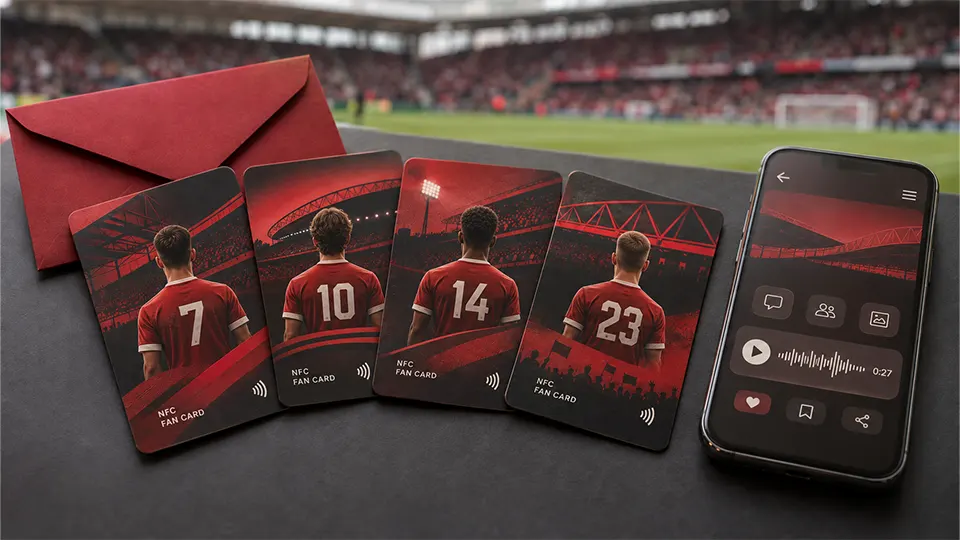
Another example emerged on 17 November 2026, when FanNFC published details of its UEFA MY GAME trading card project. The collection comprised 38 individual card designs, including 29 conventional cards and nine special editions incorporating NFC technology.
The NFC editions provided access to player biographies, career histories, exclusive photographs, complete MY GAME episodes and records of UEFA achievements without requiring a dedicated mobile application.
For sports memorabilia, embedded NFC introduces a digital component to an established collecting culture. The physical card retains its printed artwork, edition identity and collectible appeal, while the associated online material can accommodate new interviews, documentary footage or player milestones.
Limited production runs also give sports organisations greater control over the distribution of exclusive digital experiences. Where individual card authentication is supported, particular benefits can be associated with specific editions or authenticated items.
The use of NFC in sports merchandise extends beyond cards. Football shirts, badges, wristbands, keyrings and other branded accessories offer additional points of contact between clubs and their supporters.
For the 2025/26 season, English club Macclesfield FC introduced its Tap In initiative in partnership with Elms. Official shirts incorporated an NFC-enabled badge through which supporters could access match-specific material using a smartphone, without downloading an application.
Available experiences included:
A similar approach was adopted by Turkish football club Trabzonspor in collaboration with Avery Dennison. Its connected shirts incorporated NFC-enabled crests offering access to player messages, transfer announcements and supporter voting activities.
These projects have particular commercial significance for clubs with geographically dispersed fan bases. Supporters living overseas may purchase official merchandise regularly despite rarely attending matches in person. Connected merchandise provides access to club activities independently of stadium attendance.
The physical product also remains in circulation after the original purchase. A shirt worn during a televised match, a membership card carried in a wallet or a keyring used every day can accommodate repeated interactions with club content throughout the sporting calendar.
NFC fan cards operate at a frequency of 13.56 MHz and typically contain a passive integrated circuit connected to an antenna. The electromagnetic field generated by a compatible smartphone or reader supplies the energy required for communication, eliminating the need for an internal battery.
Chip selection varies according to the card’s intended functionality, security requirements and production specifications. Common options within the NXP NFC portfolio include:
The relatively small memory capacity of these chips reflects the way connected cards operate. Video recordings, player profiles and membership information are normally hosted online. The chip contains a digital reference or authentication data that connects the card to the relevant platform.
Standard-format products such as the DTB-Standard NFC Card, measuring 85.5 × 54 mm, provide a familiar physical format for sports membership and promotional applications. Materials including PVC, PET and PETG accommodate different printing, durability and presentation requirements.
High-value collectibles introduce additional security considerations. Chips supporting cryptographic authentication can generate verifiable data during a tap, allowing a connected platform to assess the authenticity of the physical item. Secure membership and stadium access applications may require different chip families, such as MIFARE DESFire EV3, together with compatible readers and dedicated credential management systems.
Professional football generates revenue through broadcasting, sponsorship, matchday activities, membership subscriptions and merchandise sales. NFC fan cards have relevance across several of these commercial categories because they provide a physical connection to club-controlled digital services.
A limited-edition card distributed with a football shirt can increase the perceived value of the original purchase while creating opportunities for subsequent engagement. Sponsor-funded content, merchandise campaigns and member-exclusive activities can be associated with the same physical item during different stages of a season.
For commercial partners, connected cards can also provide measurable interaction data. Where appropriate consent mechanisms and analytics systems are in place, clubs can record content visits, campaign participation and benefit redemption. These records provide additional insight into supporter behaviour beyond conventional merchandise sales and attendance figures.
The relationship is particularly significant for sports organisations seeking to maintain direct contact with international audiences. Social media platforms remain important distribution channels, but interactions through NFC-enabled merchandise can take place within a club’s own digital environment, where membership services, content libraries and retail activities are managed alongside supporter accounts.
A physical fan card may remain in a supporter’s collection for years. Its practical lifespan depends on the durability of the card, the continued availability of the associated digital platform and the club’s management of the content connected to it. For sports organisations with extensive supporter communities, these characteristics create a commercial relationship that can extend across multiple seasons and geographical markets.